

If you’re looking to make serious money as a gambling affiliate in 2025, one tactic stands out far above the rest: Parasite-SEO, also known as authority hijacking or domain piggybacking. It’s fast, effective—and controversial.
The SEO community has been buzzing about this for months, with figures like Charles Floate sharing deep insights on LinkedIn.
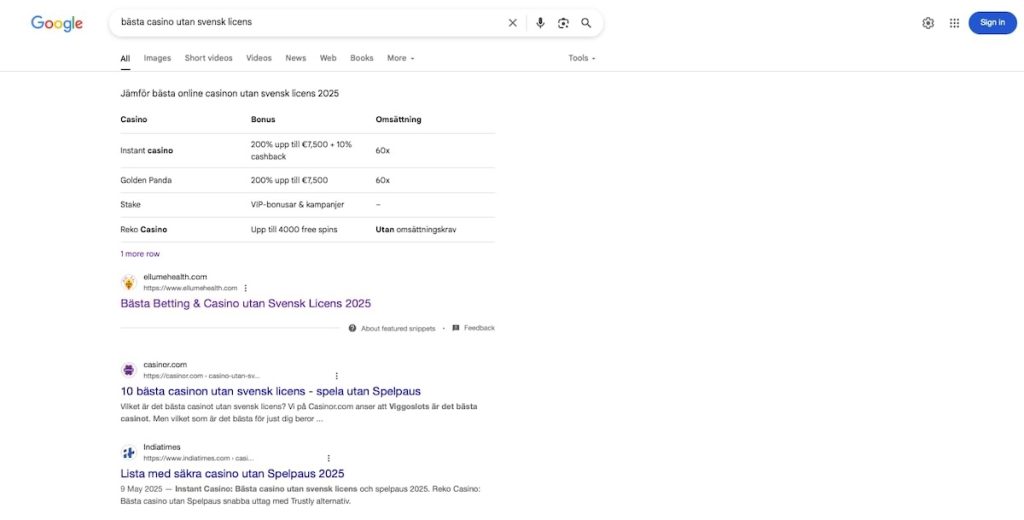
And when you look at some of the most lucrative gambling-related keywords—like “best casino in the US,” “non Gamstop casinos” in the UK, or “casinos without a Swedish license”—you’ll notice something odd:
None of the top-ranking sites are traditional gambling operators.
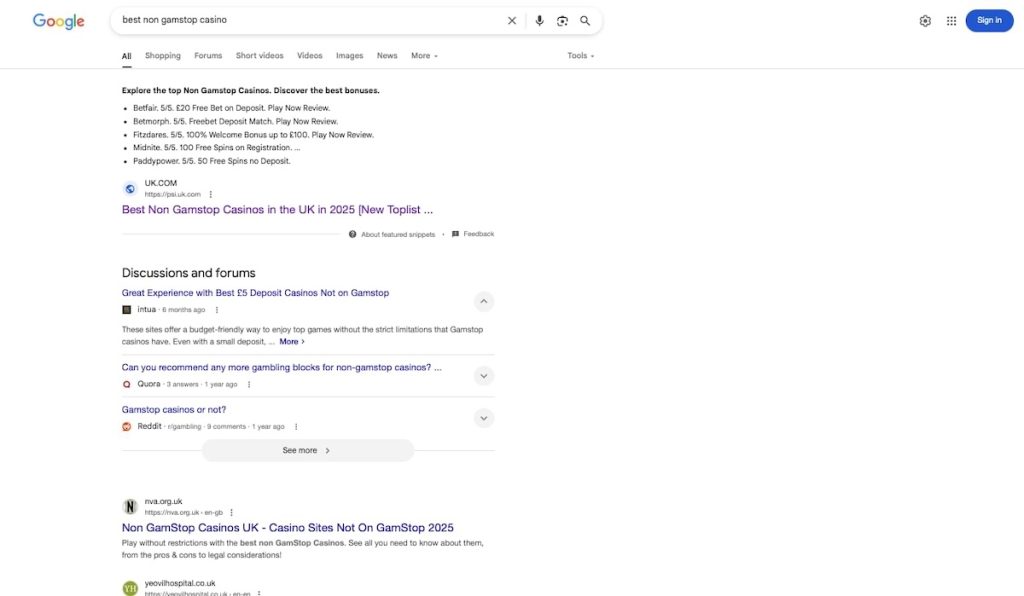
Instead, these search results are being dominated by expired domains, overtaken websites, and non-relevant authority platforms. Their primary advantage?
A powerful backlink profile—not high-quality, niche-specific content.
Let’s break it down with real examples.
Real Money Online Casino: A Case Study in Authority Abuse
Take the hyper-competitive US keyword “real money online casino.” You’d expect this SERP to be filled with giants like BetMGM or Gambling.com, right?
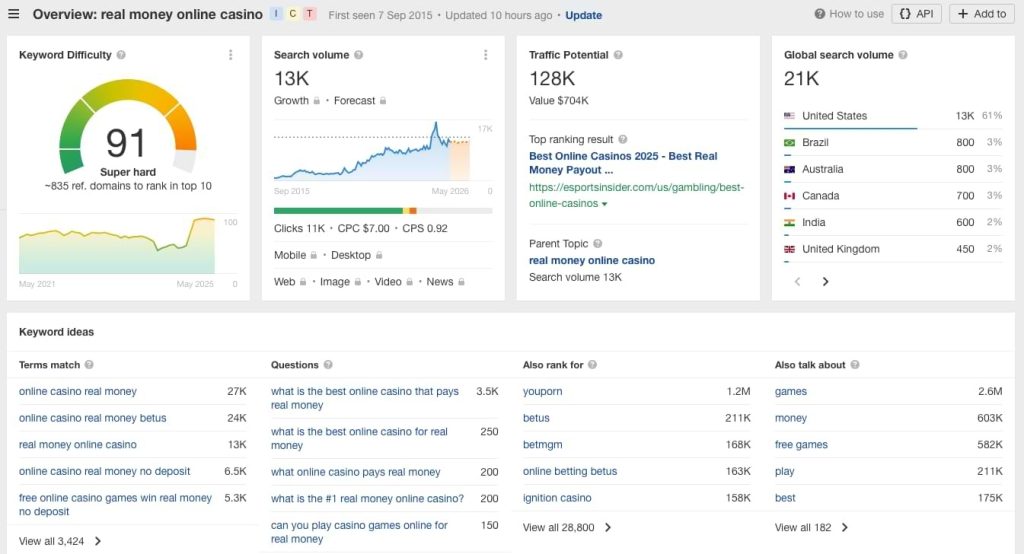
Instead, topping the list is EsportsInsider.com, a site originally focused on eSports news. Its historical traffic was unimpressive—until recently.
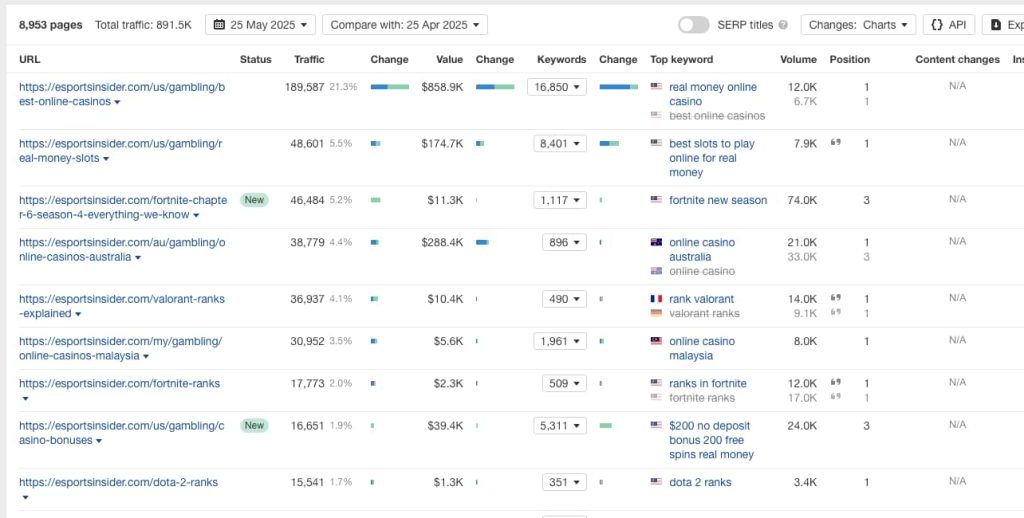
Suddenly, it’s ranking #1 for “Best Online Casino USA” and even “Best slots to play online for real money.”

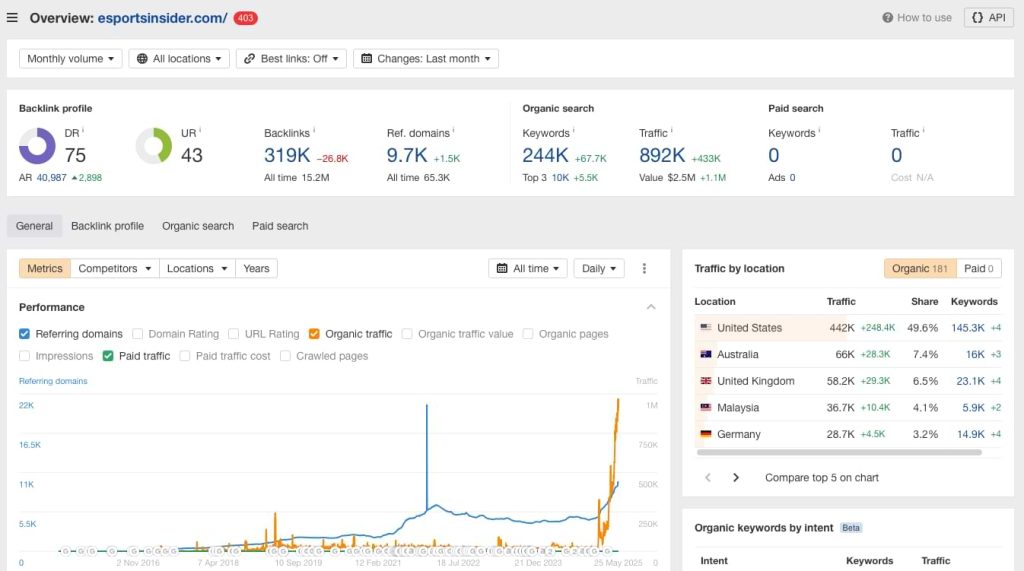
But it doesn’t stop there. The same site is also ranking #1 for online casino-related keywords in Australia and Malaysia—markets it has zero organic connection to.
So what changed?
Certainly not the content. The pages are generic and offer little visual or interactive value. What did change is the strategic use of:
- A domain with a strong backlink profile
- Redirect tactics
- Possibly internal link manipulation through private blog networks or paid placements
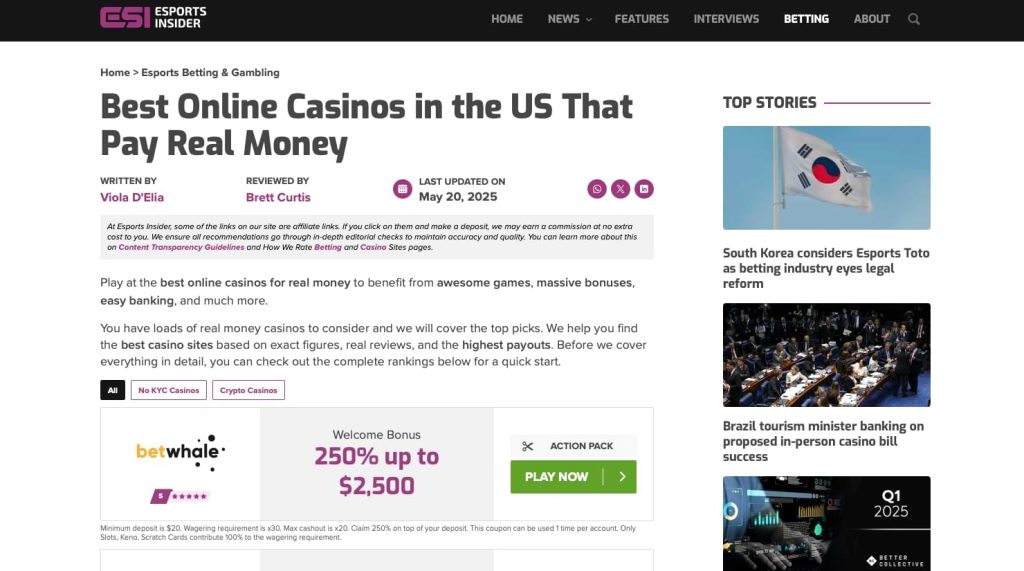
Google’s current algorithms still lean heavily on domain authority, even when the topical relevance is weak.
Metrotimes.com: The Poster Child for Parasite-SEO
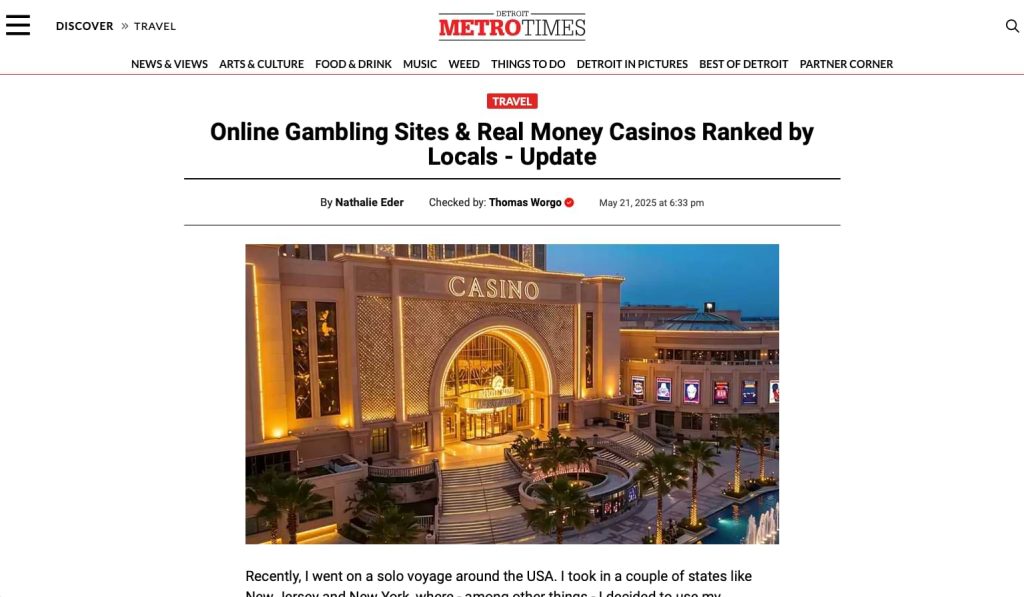
Let’s look at another competitive term: “Best Online Casino.”
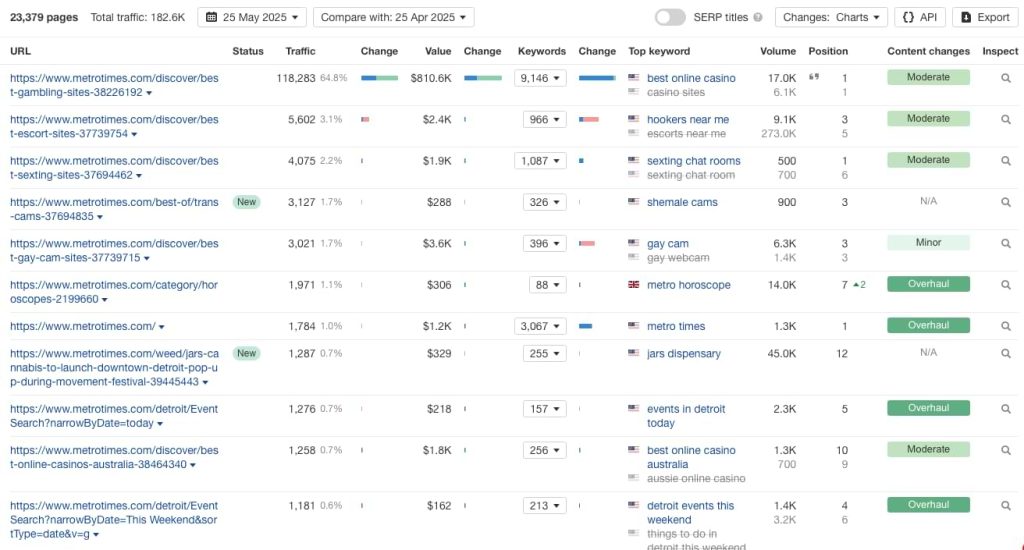
Who ranks #1? Metrotimes.com—a regional news and entertainment outlet. Under the guise of a “Travel” article, you’ll find a thinly-veiled affiliate listicle clearly designed to drive gambling signups.
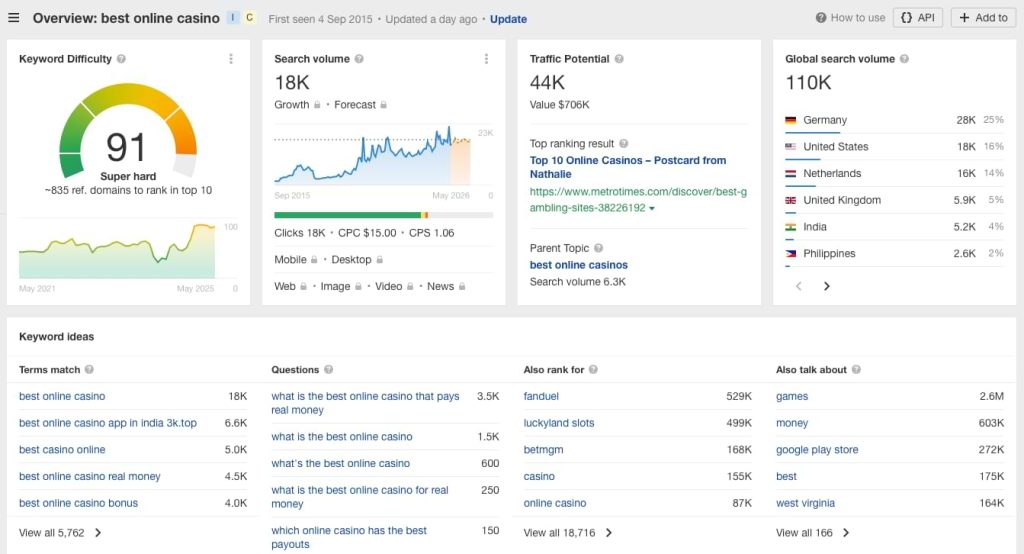
It’s a textbook Parasite-SEO play: Use a high-DR site, host an affiliate article, and cash in on the link equity.
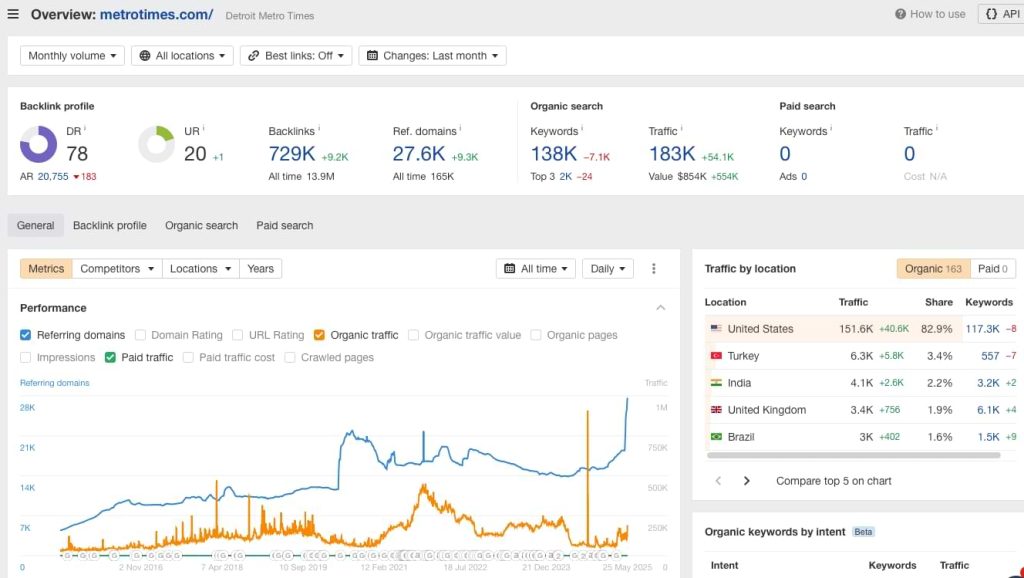
Whether the article was placed by Metrotimes themselves or an external affiliate is unclear – but what’s certain is that this one page is likely making more money than the rest of their business combined.
Even more impressive: it’s ranking ahead of industry giants.
Globenewswire.com: Press Release or Affiliate Machine?
Second in the SERPs, after the “People Also Ask” box, we find another Parasite-SEO gem: Globenewswire.com.
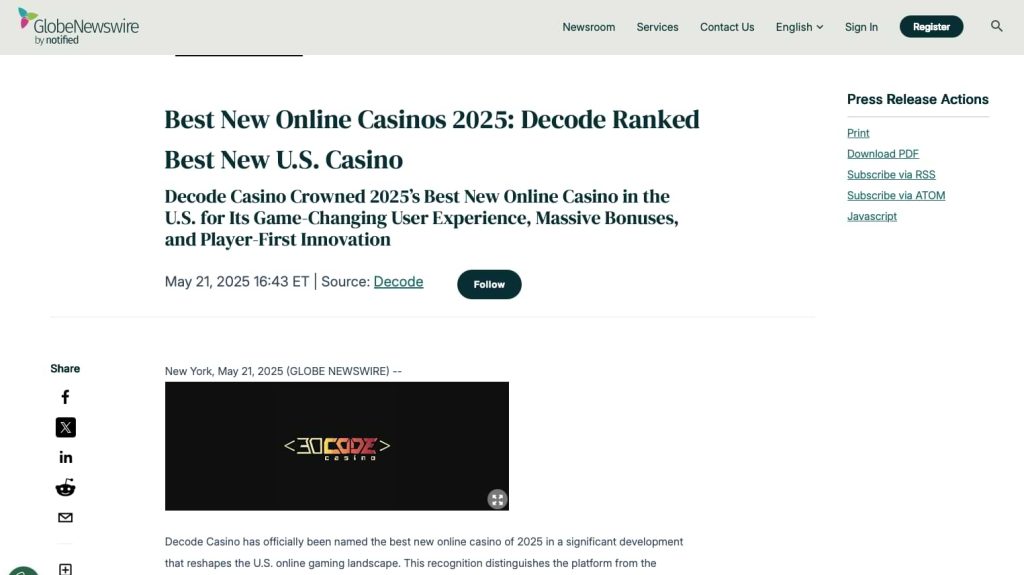
On the surface, it’s a standard press release platform. But when you look closer, the ranking article is low-effort and provides little real value to users.
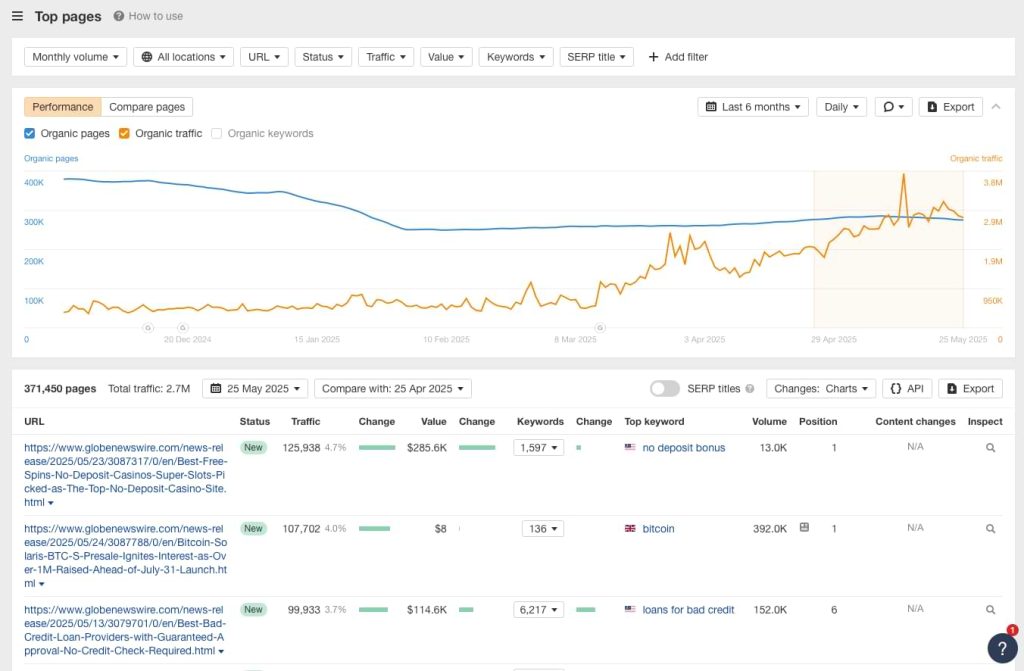
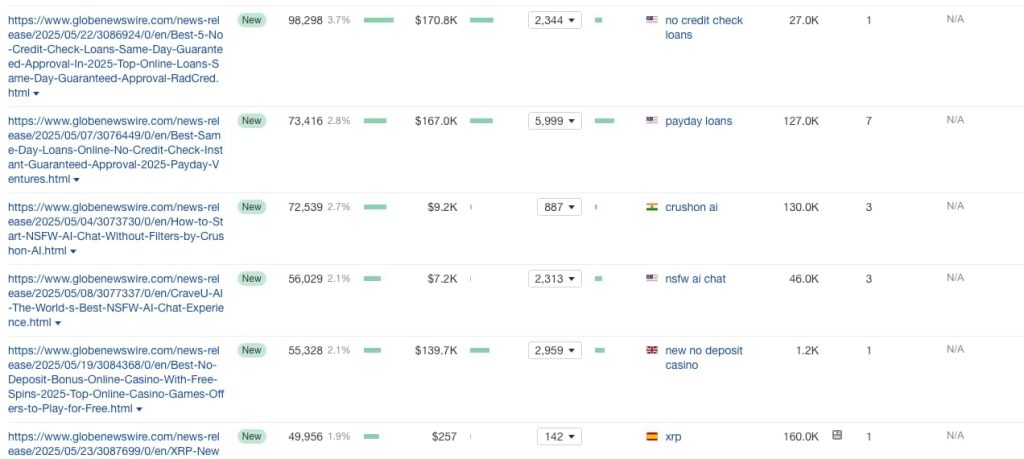
Yet it’s ranking for keywords like “free spins no deposit,” generating 100,000+ monthly visits from that term alone.
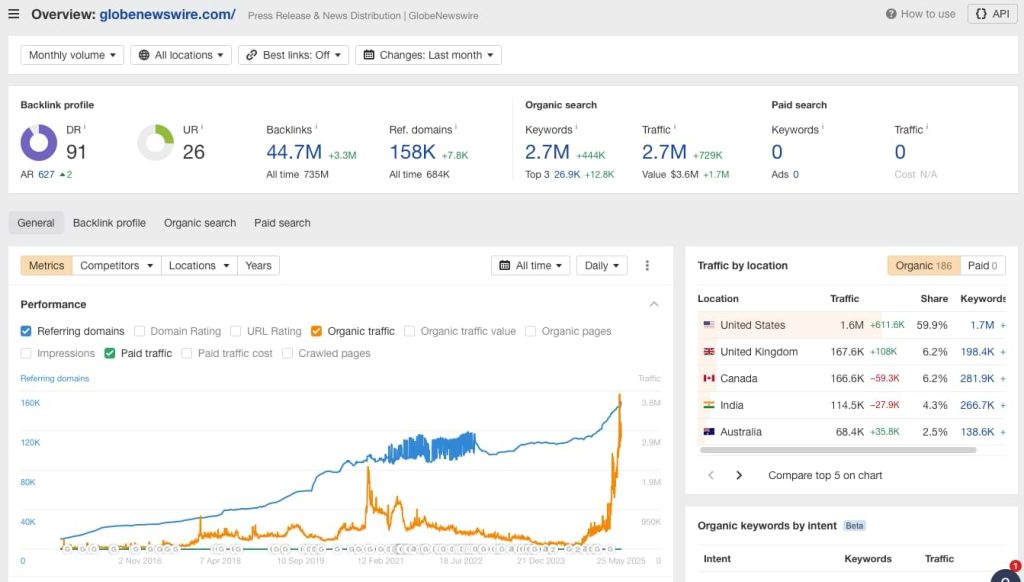
That’s not all. Since affiliates began using the site to host branded newsroom content, Globenewswire’s traffic has exploded—from around 100,000 monthly visits in September to nearly 3 million today.
It’s pure authority abuse: affiliates placing their content on ultra-high DR domains and boosting it through link schemes.
Why It Works (And Why It’s Hard to Replicate)
So, what makes Parasite-SEO so effective?
- High DR sites rank fast, bypassing sandbox periods and needing fewer backlinks
- Google still prioritizes authority over relevance in many commercial SERPs
- Backlink profiles built years ago still have outsized influence, regardless of topic shift
But this isn’t plug-and-play. The players using this tactic typically:
- Own or control dozens of supporting domains
- Pay high placement fees
- Work with strong internal SEO teams or consultants
What Is Parasite-SEO?
| Term | Description |
|---|---|
| Parasite-SEO | Ranking content on high-authority websites (e.g., news sites, press release platforms) to exploit their domain power. |
| Also known as | Authority hijacking, piggyback SEO, or content injection. |
| Typical goal | To rank affiliate content for high-value commercial keywords |
| Risks | May violate Google’s quality guidelines; rankings can be unstable or penalized |
Can Small Affiliates Compete?
Here’s the reality: most smaller affiliates won’t be able to outbid or out-link these giants. But that doesn’t mean you can’t leverage the method.
Here are some scaled-down tactics:
- Look for expired domains with strong backlinks and rebuild them as micro-niche sites
- Partner with smaller publishers and pay for branded articles with clean internal links
- Use press release platforms tactically and build Tier-2 backlinks to strengthen them
It’s all about finding underserved niches, replicating the model, and scaling smartly.
Final Thoughts
In 2025, Google’s SERPs are clearly vulnerable to link-based manipulation, and Parasite-SEO is the clearest evidence of that. While it blurs the line between white-hat and black-hat SEO, the reality is: it works.
If you’re serious about breaking into the most profitable gambling keywords, authority abuse isn’t just a strategy—it’s the strategy.
Just know: it’s a high-reward, high-risk game. But for affiliates willing to play it smart, it’s also the fastest path to massive traffic—and even bigger payouts.