


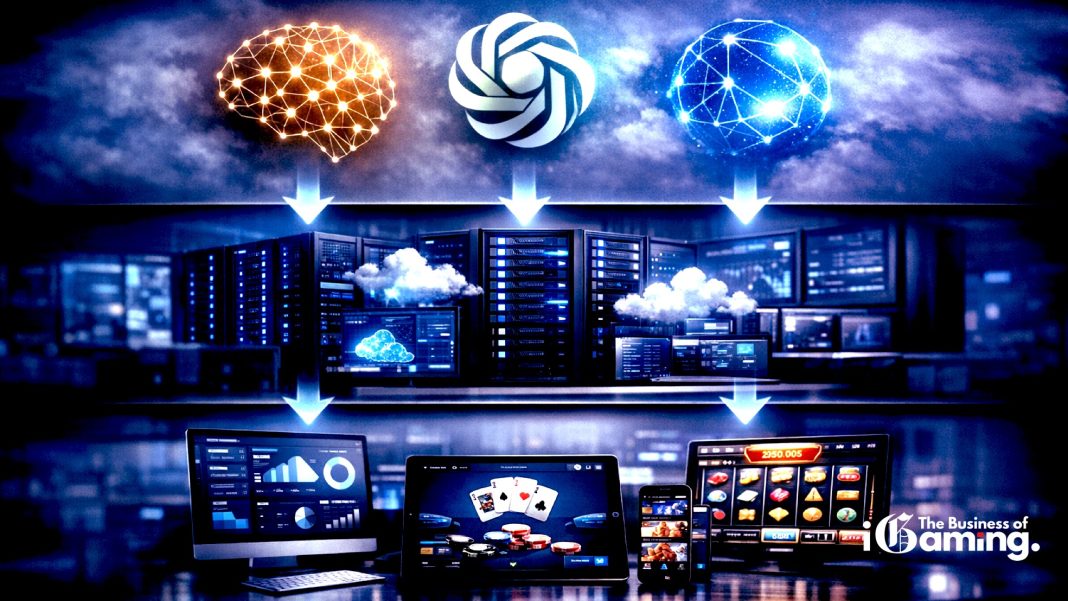

There is a misconception spreading through tech circles: that AI model profitability is under threat because cheaper alternatives exist. Open-source models, lower token prices, and growing competition from players like Meta and DeepSeek all suggest a race to the bottom. But the reality facing gaming operators, affiliates, and technology providers is more nuanced.
The market for AI models is not becoming commoditised. Instead, it is bifurcating. Operators do face real choices between premium models from Anthropic and OpenAI versus increasingly capable open-weight alternatives. Yet within the iGaming sector, where reliability and precision drive revenue directly, the economics strongly favour premium intelligence.
The Price of Intelligence Keeps Falling
Token prices have been declining since early 2024. As more models enter the market and capabilities converge, the raw cost of running an inference has genuinely compressed. This is not speculation – it is measurable across cloud platforms. A query that cost one unit six months ago now costs fractions.
For commodity tasks, this is transformative. Summarising documents, translating player communications, or categorising support tickets can run on any model. Cost per task plummets, and many operators will rationally choose the cheapest option that works.
But this logic breaks down when errors carry weight. A chatbot that gives wrong information annoys a player. An AI agent that flags fraudulent transactions, approves player payouts, or optimises your affiliate payout structure in error can cost far more than any saving on model compute.
Precision Has Economic Value
Consider a concrete example from player retention. An AI agent identifies players at churn risk and recommends personalised re-engagement offers. A basic model might detect risk in 85 out of 100 cases. A premium model might catch 95 out of 100. Those extra ten players represent real lifetime value.
Or take affiliate network management. An AI agent processes affiliate applications, verifies compliance, suggests partner tiers, and flags high-risk submissions. If it approves a fraudulent affiliate, the cost is not a few pence – it is chargebacks, regulatory attention, and reputational damage. If it rejects a legitimate partner, you lose revenue. The model must be reliable.
Premium models consistently outperform on reasoning tasks that require multiple steps, contextual precision, and the ability to change course mid-process. For gaming operators deploying AI agents across player acquisition, fraud detection, operations, and compliance, that reliability compounds into significant ROI.
The Real Cost Is More Than Tokens
Operators do not pay just for model inference. They pay for governance, security, and control. Using Claude or GPT through an enterprise deployment means data stays within your jurisdiction, logging is comprehensive, audit trails are complete, and you know exactly where player information is processed. You get support, SLAs, and the ability to escalate issues to a provider accountable to your business.
Running an open-weight model locally or through a third-party gives you different trade-offs. You own the model and can customise it, but you own the infrastructure burden, security maintenance, and compliance responsibility as well. For many operators, especially smaller affiliates and emerging operators, this is prohibitively complex.
Enterprise platforms from OpenAI, Anthropic, Microsoft, and Google bundle the model, the infrastructure, the governance tooling, and the accountability. That bundle has value beyond the cost of compute.
AI Agents Change the Economics
The real multiplier effect arrives with AI agents. A chatbot responds to one player question. An agent can handle end-to-end workflows. It might retrieve player history, check account balances, apply promotional offers, process a withdrawal request, and send a confirmation – all in sequence without human intervention.
That agent runs hundreds of model queries as it moves through the workflow. Each decision point, each verification check, each API call to your backend systems triggers more inference. When agents begin handling playerops at scale, token consumption scales multiplicatively.
This is why Anthropic, OpenAI, and Google are growing revenue even as token prices fall. The volume of queries per agent-driven workflow grows faster than unit prices decline. The math works.
The Supply Chain Remains a Bottleneck
Beneath all pricing discussion sits a physical reality: compute capacity is constrained. GPUs, memory, networking, power, and cooling are controlled by a limited set of manufacturers and infrastructure providers.
Nvidia dominates accelerator design. TSMC manufactures most leading-edge chips. Broadcom supplies networking. Micron, SK Hynix, and Samsung provide advanced memory. When myriad AI models converge on the same hardware, these suppliers win regardless of which model you choose.
For gaming operators and affiliates, this matters. If you are considering which AI platform to build on, remember that the infrastructure tier benefits from broad demand growth. Your choice of model influences margin at the model layer but scarcely touches the economics of the supply chain below.
This is why hyperscalers like Microsoft and Google are attractive long-term bets. They sit across multiple layers: they run cloud infrastructure, they host multiple models, they have software stacks (Salesforce integration, enterprise apps), and they own distribution channels to operators. They are insulated from any single model’s commoditisation.
Where Operators and Affiliates Should Look
For iGaming, the practical takeaway is clear. Do not assume the cheapest model is optimal. Evaluate based on yield per pound spent – the accuracy, speed, and reliability you get for each unit of outlay. A model that costs 20% more but cuts fraud by 30% or improves player prediction accuracy by 15% pays for itself immediately.
Build your AI strategy on platforms that let you mix models. Use cheaper models for routine tasks and premium models for high-stakes decisions. Ensure your provider gives you governance, audit trails, and the ability to trace AI decisions if regulators ask. This is no longer optional for licensed operators.
For affiliates, leaning on AI for content optimisation, player matching, and campaign bidding requires trust in accuracy. Premium models reduce false positives in targeting and improve ROI on acquisition spend. Affiliates operating in regulated markets particularly cannot afford careless AI.
Open-Source as Complement, Not Replacement
Open-weight models are not threats to gaming operators. They are tools for specific use cases. Summarising text, generating variant content, basic classification – these work fine on cheaper models. But when AI moves from optimisation to decision-making, when mistakes carry revenue and compliance impact, premium intelligence becomes a competitive advantage.
The question facing operators is not whether to use AI – you must. The question is which tier to deploy and for which functions. That requires clarity on business impact, not just cost per token.
AI profitability remains robust because the gaming industry does not buy intelligence in isolation. It buys business outcomes: better retention, lower fraud, faster operations, and regulatory confidence. On that measure, the premium models still deliver value that justifies their cost.