
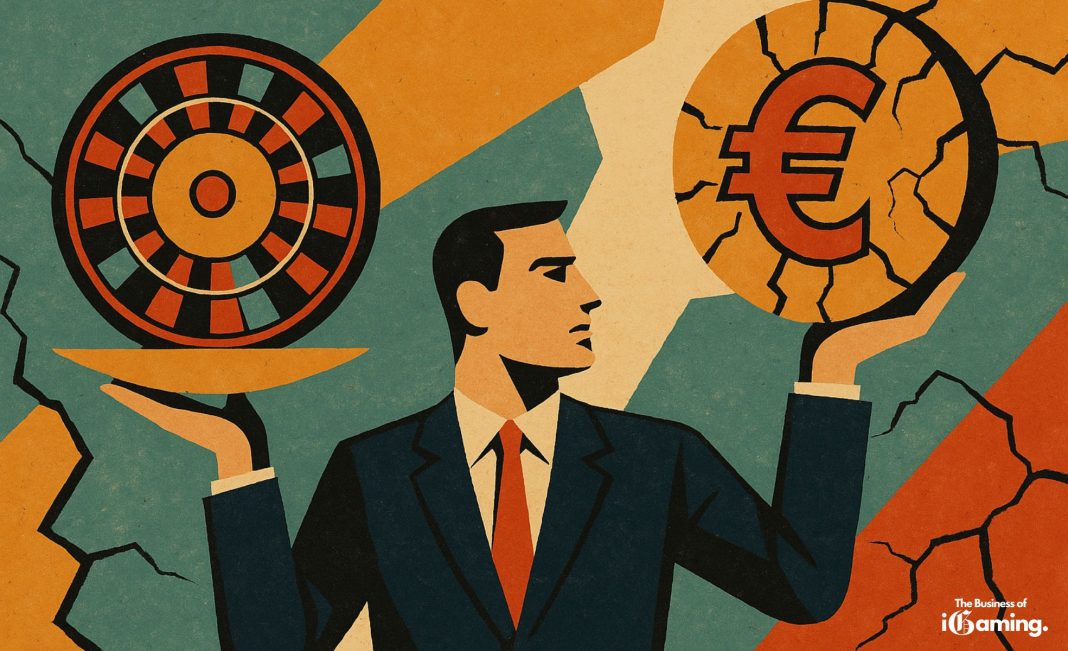

When tech valuations bend under pressure and the market begins to question whether the AI boom has inflated itself beyond reason, it’s natural to look sideways at other fast-growing industries. iGaming is one of them. The sector has expanded at a pace that feels almost detached from traditional economic cycles—powered by regulatory openings, technological leaps, and shifting consumer behaviour.
But iGaming is also young. The last big financial shock—the 2008–2010 crisis—happened before online gambling had matured into the global, regulated, multi-billion-euro ecosystem it is today. There is no long historical line to consult. And this makes the current moment especially interesting.
So how resilient is the iGaming Business to wider financial cracks?
And what happens when consumer confidence, liquidity, and discretionary spending collide with a digital entertainment industry built on quick behaviour shifts and real-time transactions?
Below is a closer look at the mechanics behind gambling behaviour, market cycles, and the realistic “alternative scenarios” for a sector that sits in an unusual place between entertainment, risk, and habit.
The Missing Precedent: Why the Sector Has No True Stress Test
Unlike retail, hospitality, or travel, online gambling did not meaningfully exist during the previous large-scale financial downturn.
- No mass-market adoption in 2008
Regulation was fragmented, mobile penetration low, and most gambling still happened in physical venues. - No streaming-era engagement loops
Casino streamers, YouTube gambling creators, and influencer-driven casino marketing had not yet emerged. - No widespread affiliate ecosystem
Today’s model of regional affiliates pushing traffic through comparison sites, bonus pages, and social content didn’t exist.
In other words, the modern iGaming economy has never experienced a serious recession.
This makes predictions harder—but not impossible.
What We Do Know: Gambling Behaviour During Stress
Even without a perfect analogue, decades of behavioural research show that gambling follows certain psychological patterns during times of financial uncertainty.
Two contradictory forces tend to emerge at the same time:
1. Gambling can increase during downturns
People under stress seek escapism. Casino games provide quick cycles, small buy-ins, and a sense of momentary relief.
Historically, lotteries, scratch cards, and low-stake betting often see an uptick during recessions, especially among groups squeezed hardest.
2. High-value gambling tends to contract
VIP activity, high-roller play, and upper-middle-income spending often drop when investments shrink and portfolios wobble.
This creates a barbell-shaped effect:
- Low-stakes volume may rise
- High-stakes profitability may fall
Whether the net effect is positive or negative depends on market mix and operator exposure.
The New Variables: Why 2025 Is Different
Three structural shifts make today’s environment fundamentally different from 2008:
1. Mobile-native gambling
Instant accessibility increases impulsive behaviour and short play sessions.
2. Cross-border liquidity of digital entertainment
Players easily move between regulated and offshore markets. If one market tightens, demand relocates.
3. Evolved mechanics and personalised game loops
Crash games, bite-sized bonus structures, and session-based engagement create a digital entertainment feel rather than traditional betting.
This makes gambling behaviour more emotionally reactive—and potentially more volatile—during financial uncertainty.
Business Stress Test Simulator
Plug in your current numbers and simulate what happens to your business if revenue drops and costs creep up in a downturn. Useful for iGaming affiliates, operators, or any digital business.
Three Alternative Scenarios in a Market Crack
Scenario 1: The Resilient Expansion (Bull Case)
The sector holds up—and may even grow—if:
- Consumers cut big expenses and shift to low-cost digital entertainment
- Operators focus on retention and personalised offers
- New regulated markets continue to open globally
iGaming in this scenario behaves like streaming services during downturns: a cheap escape replacing more expensive lifestyle spending.
Scenario 2: The Barbell Breaks (Neutral Case)
Low-value gambling increases, high-value decreases, and the sector grows unevenly.
- Slots, crash games, and micro-stakes activity stay strong
- VIP revenue contracts
- Affiliates see traffic stability but lower deposit values
This is the most likely near-term outcome.
Scenario 3: The Tightening Spiral (Bear Case)
A severe financial shock could cause widespread contraction:
- First deposits fall
- Bonus hunting declines
- Streaming audiences shrink
- VIP activity dries up entirely
Certain markets might even see operators exiting.
This scenario requires a far deeper macroeconomic deterioration than what we have today—but cannot be dismissed.
The AI Bubble & iGaming: Why the Connection Matters
The AI sector’s inflation and the early signs of its correction matter because the industries—digital tech and iGaming—are more intertwined than they appear.
1. AI-driven marketing costs and partnerships
If tech budgets tighten, sponsorships and influencer collaborations may also contract.
2. Slower tech innovation cycles
Identity verification, responsible gambling tools, fraud detection, and game personalization all depend on a healthy tech sector.
3. Investor sentiment spillover
Even if player activity stays stable, public gaming companies may face valuation pressure.
A New Reality: AI Has Already Reshaped iGaming Employment
Any discussion about resilience also has to acknowledge that the industry is already in the middle of its own internal shock — caused not by macro conditions, but by the aggressive adoption of generative AI.
This is the side-effect many people in the sector feel long before any recession:
1. Content roles have been hit hardest
Affiliate sites, operators, and media hubs have reduced editorial teams, outsourced less, or consolidated content work because AI speeds up production dramatically.
Content hubs that once needed 15–20 writers may now operate with 3–5.
2. Design and creative departments have shrunk
Image generation, banner creation, and localization have increasingly shifted toward automated workflows.
3. Small affiliates and studios face margin pressure
AI allows larger affiliates and operators to scale content faster and cheaper, widening the gap and pushing smaller teams to cut costs.
4. Job security is weaker across marketing and editorial
Even before any financial slowdown, staff numbers have tightened as companies prioritize automation, performance-based roles, and leaner cost structures.
In other words:
iGaming is experiencing a “silent contraction” driven by AI before any macroeconomic contraction has even arrived.
This means the sector enters a potential recession already leaner, more automated, and with fewer buffers than in previous years.
Where the Real Risk Lies: Regulation Meets Economics
If financial stress and political pressure converge, governments may pursue tighter gambling controls:
- Higher gambling taxes
- Bonus restrictions
- Stake limits
- Licensing restructures
- Payment provider limitations
History shows that regulation—not consumer spending—is the greatest threat to operator revenue.
If recessionary dynamics combine with regulatory tightening, the sector becomes vulnerable.
Conclusion: A Sector Built for Volatility—But Not Invincible
iGaming is a fast-moving, globally diversified, high-margin digital industry. Many of its characteristics make it surprisingly resilient to macroeconomic storms.
However:
- Low-stakes play may increase
- High-stakes play may contract
- Affiliates may see volatile earnings
- Public companies could face valuation pressure
- AI has already triggered job losses and structural shifts
- Regulation remains the single biggest systemic threat
Without a true historical recession to measure against, predictions come with uncertainty. But one pattern remains consistent:
People don’t stop gambling in a crisis. They change how they gamble.
And now, for the first time, they may make those shifts in a sector already reshaped by AI before the real economic test even begins.