




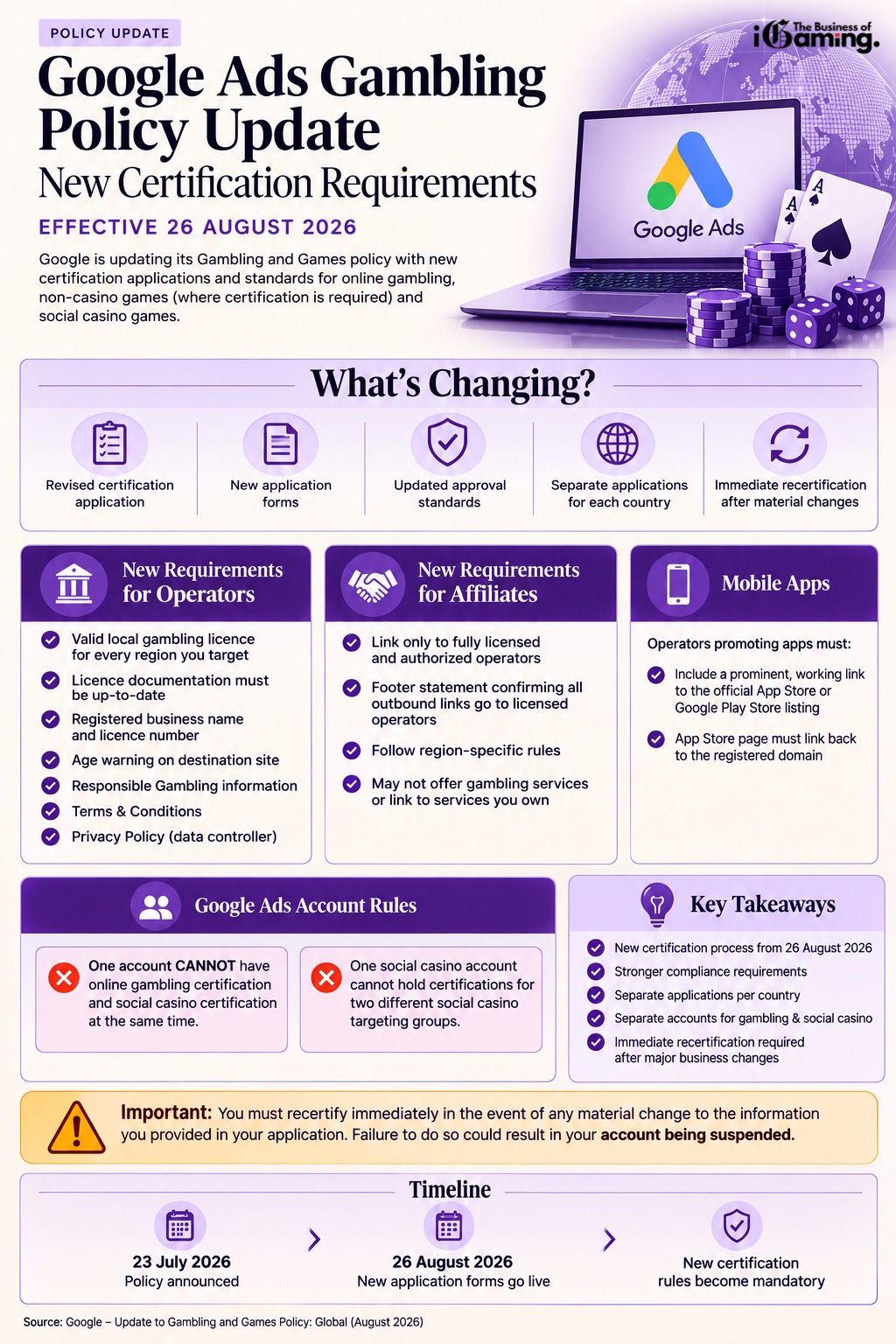
Google is introducing one of its most significant updates to its Gambling and Games advertising policy in recent years. From 26 August 2026, advertisers promoting online gambling, gambling-related content and certain non-casino games will need to comply with a revised certification process featuring stricter compliance requirements and updated application procedures.
For operators, affiliate websites and digital marketing agencies, the changes go well beyond a simple paperwork update. Google is introducing new structural requirements for certification, clearer rules for affiliate websites and stronger compliance obligations that could affect how gambling businesses advertise across Google Ads.
A New Certification Process
Beginning on 26 August 2026, all new applicants must use Google’s revised certification forms when applying to advertise gambling-related products and services.
Google states that advertisers must continue to obtain certification before running gambling advertising, but the application process has been updated to ensure that licensing information, operational details and regulatory compliance are properly documented before approval is granted.
The update applies to:
- Online gambling operators
- Gambling-promoting content (affiliate and comparison websites)
- Online non-casino games requiring certification
- Social casino games
Stronger Compliance Requirements for Operators
One of the biggest changes is the amount of information operators must now provide when applying for certification. Google requires operators to hold a valid local licence for every jurisdiction they intend to target. Licensing documentation must be current and accurately reflect the relationship between the advertiser, the licensed gambling entity and the promoted domain.
Destination websites must also clearly display:
- An age warning
- Responsible gambling or addiction support information
- Terms and Conditions
- A Privacy Policy identifying the data controller
- The registered business name
- Licence number
- Licence holder information
These requirements are intended to make licensing information more transparent for both users and regulators.
Affiliate Websites Face New Obligations
Perhaps the most interesting changes affect affiliate and comparison websites. Google now explicitly states that gambling-promoting websites which are not themselves licensed operators must link exclusively to gambling operators that are fully licensed and authorised within the geographic region being targeted.
In addition, affiliate websites must include a clear statement in their footer confirming that all outbound gambling links direct users only to licensed and authorised operators within the relevant jurisdiction.
For many affiliate businesses, this means reviewing outbound links, updating compliance statements and ensuring that regional targeting aligns with local licensing requirements.
New Rules for Mobile App Promotion
Google has also introduced additional requirements for operators promoting mobile applications. If an operator advertises a gambling app, the licensed website must include a prominent, working link to the application’s official listing on either the Google Play Store or Apple App Store.
Likewise, the app store listing must contain a direct link back to the registered and licensed website. This creates a clearer connection between the licensed operator and its mobile application.
Separate Applications for Every Country
Another significant operational change is that advertisers targeting multiple countries must now submit a separate certification application for each jurisdiction.
Rather than relying on a single approval across multiple regulated markets, each country requires its own application and supporting documentation.
For international operators advertising across Europe, North America, Latin America or Asia-Pacific, this could substantially increase administrative work but also allows Google to assess compliance on a country-by-country basis.
Separate Google Ads Accounts May Be Required
Google has also introduced new account structure restrictions. Under the updated policy:
- A single Google Ads account cannot simultaneously hold Online Gambling and Social Casino certifications.
- A single Social Casino account cannot hold certifications for multiple Social Casino targeting groups.
Businesses operating across multiple verticals may therefore need separate advertising accounts to remain compliant.
Immediate Recertification After Material Changes
Perhaps the strictest addition concerns ongoing compliance. Google states that advertisers must immediately recertify whenever there is a material change to the information submitted during the original application.
Examples could include:
- Licence renewals
- Ownership changes
- Corporate restructuring
- Changes to business details
- Changes affecting regulatory status
Failure to recertify following a material change may result in account suspension.
What This Means for the Industry
Although many of these requirements reflect existing regulatory best practices, Google’s updated certification framework places greater emphasis on transparency, documentation and jurisdiction-specific compliance.
Operators should review:
- Licensing documentation
- Website footers
- Responsible gambling information
- Privacy policies
- Terms and Conditions
- Mobile app links
- Google Ads account structure
Affiliate websites should likewise ensure that all promoted operators are properly licensed for the markets they target and that required compliance statements are clearly displayed.
Final Thoughts
The updated Google Ads Gambling Policy represents one of the most comprehensive revisions to Google’s gambling certification process in recent years. Rather than simply changing application forms, Google is strengthening the compliance framework surrounding gambling advertising across its advertising ecosystem.
For operators and affiliates that prepare early, the transition should be relatively straightforward. Those that delay updating their documentation, website disclosures or certification structure, however, could face unnecessary approval delays—or even account suspension.
With the new rules taking effect on 26 August 2026, now is an ideal time for gambling businesses to review their compliance procedures and ensure they are fully prepared for Google’s revised certification standards.