

In regulated iGaming, the easy growth phase is over. Across Europe and other mature jurisdictions, operators are facing a tightening triangle of pressure: higher compliance costs, escalating acquisition spend, and increasing regulatory scrutiny. In that environment, executive gatherings are no longer about visibility or brand theatre. They are about operational survival.
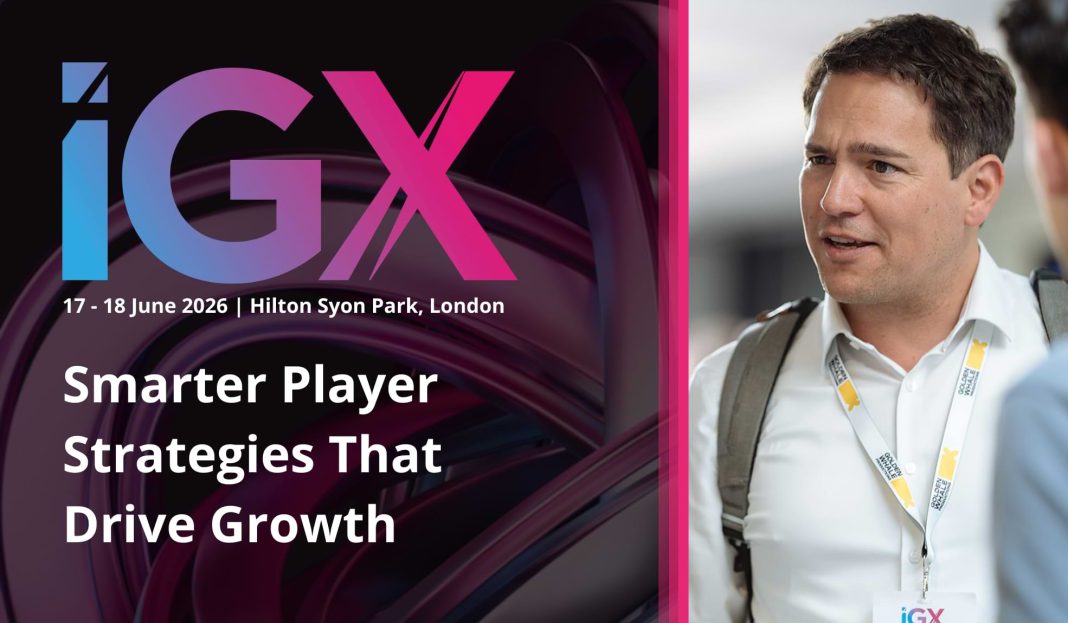
That is the backdrop against which iGX 2026 takes place on 17–18 June at Hilton Syon Park in London – a deliberately focused forum for senior leaders navigating complex, compliance-heavy markets.
Unlike large-scale expos built around scale and spectacle, iGX positions itself differently: smaller room, sharper conversations, clearer commercial intent.
An Industry Moving From Expansion to Efficiency
For much of the past decade, regulated iGaming was driven by expansion. New markets opening, aggressive customer acquisition, and venture-style growth strategies.
2026 looks different.
Customer acquisition costs in saturated markets have risen sharply. Media channels are crowded. Taxation is increasing in several jurisdictions. Meanwhile, regulators are scrutinising marketing practices and safer gambling frameworks with growing intensity.
The central question for leadership teams has shifted. It is no longer simply, “How do we grow?” but “How do we grow profitably, predictably, and compliantly?”
The iGX agenda reflects that shift. Themes such as customer acquisition efficiency, retention strategy, predictive CRM, fraud prevention, and operational resilience dominate the programme.
This is less about trend-spotting and more about execution.
Applied AI, Not Abstract AI
Artificial intelligence is now embedded across the iGaming technology stack – from trading and risk modelling to CRM and fraud detection. But in 2026, the conversation has matured.
At iGX, the focus is not speculative. It is operational.
Sessions explore how AI can be deployed to:
- Improve acquisition targeting and reduce wasted spend
- Strengthen fraud prevention frameworks
- Personalise player journeys at scale
- Increase lifetime value through predictive modelling
One discussion looks specifically at combining agentic AI with predictive CRM to create more stable revenue patterns. That phrasing – predictable revenue – is telling. In an industry often characterised by volatility, boards are now prioritising stability.
At the same time, the programme does not ignore the tension between innovation and responsibility. An Oxford-style debate examines whether next-generation AI and gamification tools enhance safer play frameworks or risk undermining them.
The inclusion of opposing viewpoints signals an industry aware that competitive advantage must coexist with regulatory credibility.
Retention as the Core Growth Lever
If acquisition was the defining strategy of the 2010s, retention is shaping the mid-2020s.
As promotional intensity becomes less sustainable, operators are turning inward – toward lifetime value optimisation, behavioural analytics, and deeper player engagement models.
Omnichannel integration is one recurring theme. Bringing together retail, online, and live casino data into a unified player view is increasingly seen as essential rather than optional. The ability to create consistent journeys across touchpoints may well determine which operators maintain share in crowded markets.
Live Casino, in particular, is being positioned as a bridge between land-based heritage and online scalability – a way to differentiate in markets where standard slot and sportsbook offerings are increasingly commoditised.
Leadership Under Constraint
Technology alone does not solve margin pressure. One of the more compelling aspects of the programme is its emphasis on leadership resilience. Building high-performing teams within heavily regulated environments requires a different management skill set than pure-growth startups.
How do organisations innovate when regulatory frameworks tighten?
How do teams maintain pace without cutting compliance corners?
How do companies nurture talent in an industry often subject to reputational scrutiny?
These are not abstract leadership questions. They are daily operational realities.
The sessions addressing organisational culture and executive decision-making suggest a recognition that structural advantage often begins inside the company, not in the tech stack.
An Operator-Led Environment
The attendee profile is also notable. With a strong operator majority and a significant proportion of C-level executives, the event is structured to facilitate decision-level dialogue rather than exploratory networking.
That dynamic matters.
In regulated markets, peer-to-peer exchange often carries more weight than vendor presentations. Executives want to understand what is working under similar regulatory constraints, not just what is theoretically possible.
By limiting scale and emphasising seniority, the format encourages candour — something rarely achieved on larger exhibition floors.
A Sign of the Industry’s Maturity
There is a broader signal here.
As regulated iGaming matures, its most important conversations are becoming less about expansion narratives and more about sustainable systems: compliance architecture, data infrastructure, team performance, and capital efficiency.
Events that mirror that maturity may become increasingly influential.
iGX does not position itself as a marketplace. It positions itself as a strategic workshop – a place where leadership teams can pressure-test ideas before taking them back to their boards.
In an industry where growth is no longer automatic, that distinction feels timely. And perhaps necessary.