


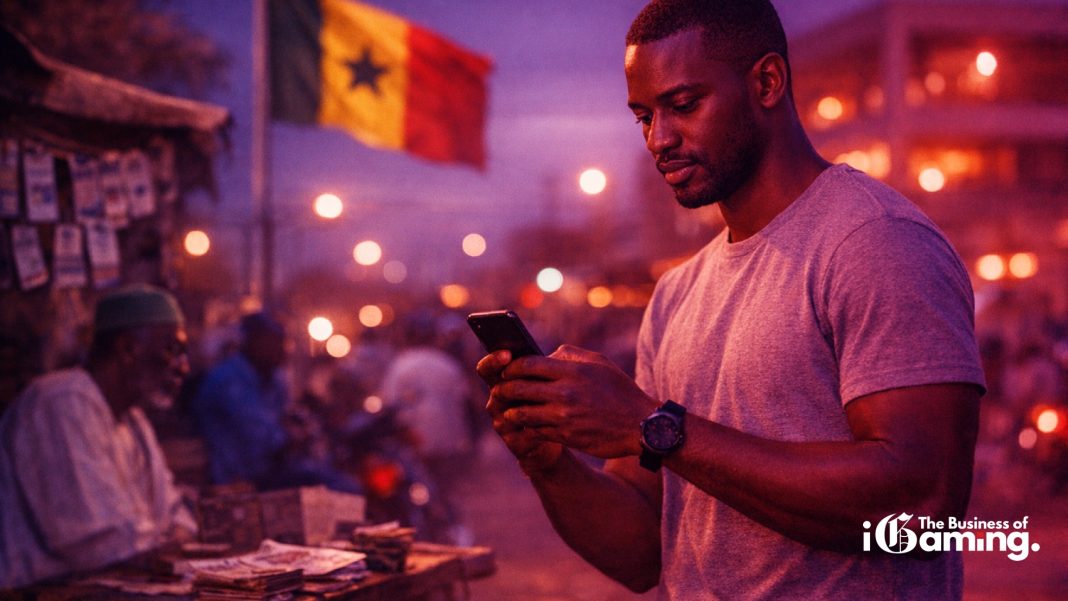

Senegal rarely tops the list when operators talk about Africa’s next big betting market. Nigeria, Kenya and South Africa dominate that conversation. But look closer at Senegal’s iGaming market growth and a different picture emerges: a mobile-first population, a state lottery operator with decades of trust behind it, and a regulator that has just started flexing its taxation muscle.
For operators and affiliates weighing up where to focus limited resources next, Senegal is worth a proper look. Here is what is actually happening on the ground.
How Big Is Senegal’s iGaming Market Today
Senegal’s gambling sector is not enormous in global terms, but it is meaningful and growing. LONASE, the state-owned Loterie Nationale Sénégalaise, reported that players wagered roughly 266 billion CFA francs, around $440 million, in 2022 alone. That figure covers lottery and sports betting turnover, not the smaller net revenue operators actually keep, but it signals a population that is already comfortable placing bets regularly.
More recent numbers point to continued momentum. Senegal’s Finance Minister confirmed the wider gambling sector mobilised more than CFA 40.9 billion, roughly $71 million, in just the first quarter of 2026. Industry estimates place the country’s broader gaming revenue on a path toward $2.1 billion by 2026, driven largely by mobile engagement rather than physical betting shops.
A Young, Digitally Native Population
Around 40% of Senegal’s population is under 30. That demographic profile matters enormously for iGaming, because younger bettors adopt mobile platforms faster, engage more frequently, and are less tied to the physical betting shop culture that still dominates in some African markets.
What Is Driving Senegal iGaming Market Growth
Three forces are pushing the market forward at once.
Mobile Penetration
Smartphone access continues to expand across urban and increasingly rural Senegal. Mobile money infrastructure, already well established across West Africa for everyday payments, gives betting operators a ready-made rail for deposits and withdrawals without needing a traditional banking relationship.
Economic Tailwinds
Senegal’s economy grew sharply in early 2025, partly on the back of new hydrocarbons output. Rising disposable income tends to filter through into discretionary spending categories, and sports betting has historically been one of the first places that shows up in emerging markets.
An Established Betting Culture
Senegal already has a gambling culture with real depth, built up over decades around LONASE’s lottery and sports betting products. New digital entrants are not trying to create demand from nothing. They are trying to capture demand that already exists and is shifting from physical outlets to mobile apps.
Regulatory Shifts Reshaping the Landscape
Growth in Senegal has not come without friction, and the regulatory environment has moved quickly over the past year.
The 20% Winnings Tax
Under Law 17/2025, Senegal introduced a 20% tax on player winnings, a change that has proven controversial with bettors and operators alike. Taxing winnings rather than gross gaming revenue shifts the burden directly onto the player experience, which tends to affect retention and betting frequency more visibly than a backend operator tax would.
betPawa’s Market Exit
The clearest signal of how disruptive this shift has been came in September 2025, when bettors organised protests against the new rules and betPawa withdrew from the Senegalese market, citing excessive fees and restrictive conditions. For an operator that has built a reputation for aggressive African market entry, a full exit is a notable data point.
The lesson for anyone considering Senegal is straightforward: this is not a market to enter with a copy-paste regulatory playbook. Local taxation dynamics need to be modelled properly before committing budget, and that means tracking regulatory data across multiple jurisdictions rather than assuming today’s rules will hold for the next licensing cycle.
LONASE’s Dominant Position
Any operator or affiliate assessing Senegal needs to understand LONASE’s role. As the state-owned lottery and betting operator, LONASE holds a level of trust and distribution reach that newer digital entrants cannot easily replicate. Its historical revenue figures still represent the clearest public benchmark for the size of the wider market.
That dominant position is not necessarily a barrier to entry for every business model. Affiliate partnerships, platform technology providers and payment specialists can all find a role in a market anchored by an incumbent, even where direct operator competition against LONASE is harder to win outright.
What This Means for the Wider West African Picture
Senegal’s trajectory echoes a pattern showing up across the region. Mozambique has recently overhauled its own online licensing framework, and similar tightening is under way in Botswana, Angola and Kenya. Senegal’s move to tax winnings directly, rather than simply raising operator-side levies, is its own distinct approach within that broader trend, but the underlying story is the same: African regulators are getting more assertive, and operators who treat compliance as a moving target rather than a fixed cost will fare better.
Senegal is also a useful reminder that market size and market opportunity are not the same thing. A $2.1 billion projection sounds modest next to Nigeria or South Africa, but for an operator, affiliate or technology provider without an existing African footprint, a smaller market with a clearer regulatory signal can be an easier place to build a first foothold than a saturated one.
The Bottom Line
Senegal iGaming market growth is real, but it is not smooth. A young, mobile-first population and an established betting culture are pulling the market forward. A sharp new winnings tax and at least one high-profile operator exit show the regulatory side is still finding its footing. Anyone weighing up an entry into Senegal, whether as an operator, affiliate or platform partner, needs to treat the country as one of West Africa’s fastest-urbanising nations with genuine upside, not a copy of its larger regional neighbours.
Keep watching how Senegal’s regulator balances revenue collection against player and operator retention over the coming year. That balance, more than the headline market size, will determine whether the country becomes a genuine West African growth story or a cautionary tale about moving too fast on taxation.
Subscribe to the Business of iGaming newsletter to stay across regulatory developments in Senegal and other emerging African markets as they happen.