


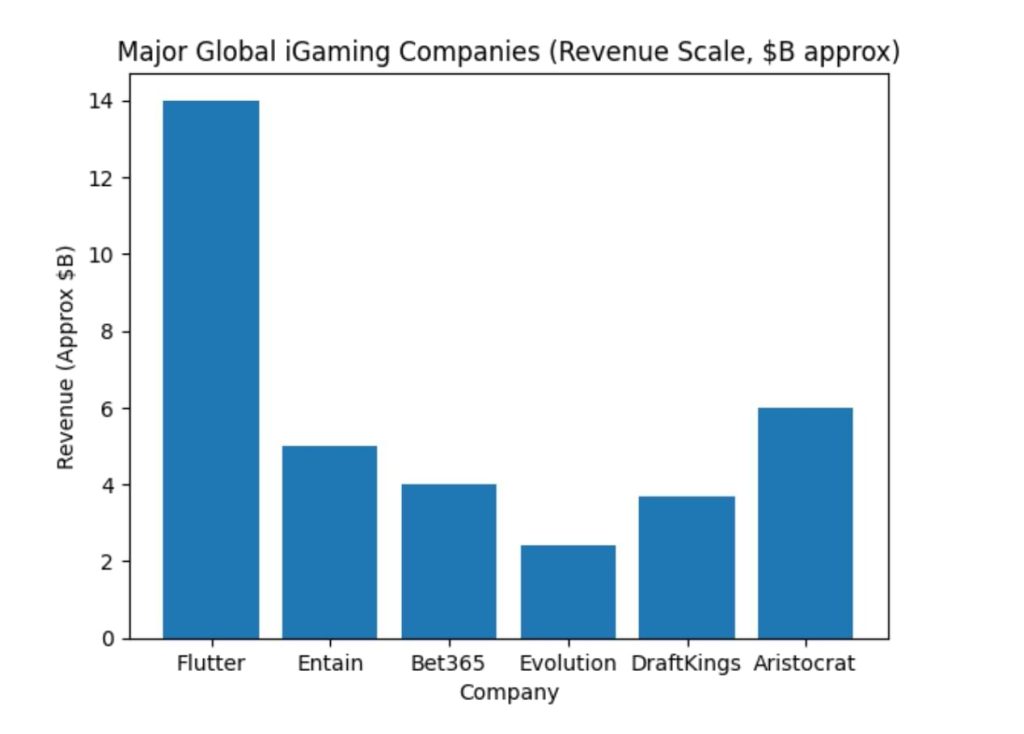
Over the past two decades, the global online gambling and betting industry has experienced significant consolidation through mergers and acquisitions (M&A). What began as a fragmented ecosystem of early online poker rooms, sportsbooks, and casino platforms has evolved into a multi-billion-dollar digital entertainment sector dominated by a handful of multinational operators.
M&A activity has been a central driver of this transformation. Companies have pursued acquisitions to expand geographically, secure proprietary technology, achieve economies of scale, and rapidly enter newly regulated markets. As governments increasingly regulate online gambling and the cost of acquiring customers rises, consolidation has become both a defensive and offensive strategy.
Today, the iGaming industry includes sports betting, online casino gaming, poker networks, fantasy sports platforms, gaming software providers, and sports data companies. Large global groups now control multiple brands across these verticals, creating complex digital ecosystems that integrate content, technology, and customer acquisition channels.
This article examines the historical development of mergers and acquisitions in the iGaming sector, highlights the largest deals globally, analyzes strategic motivations behind consolidation, and evaluates the risks and opportunities shaping the industry’s future.
Why Mergers and Acquisitions Are Common in iGaming
M&A activity occurs frequently in the online gambling sector due to several structural characteristics of the industry.
1. Regulatory Expansion
One of the primary drivers of consolidation is the expansion of regulated gambling markets. As governments legalize online betting, operators rush to establish a presence through partnerships or acquisitions.
A notable example is the legalization of sports betting in the United States following the 2018 Supreme Court decision overturning the Professional and Amateur Sports Protection Act (PASPA). This created a multi-billion-dollar opportunity and triggered a wave of investments and acquisitions by European operators seeking to enter the U.S. market.
2. Customer Acquisition Costs
Online gambling platforms spend heavily on marketing and promotions to attract players. In highly competitive markets such as the United States and the United Kingdom, acquiring a new customer can cost hundreds of dollars.
Larger companies therefore pursue acquisitions to expand their user base and reduce marketing expenses through economies of scale.
3. Technology and Vertical Integration
Modern iGaming operators rely on complex technological infrastructure including:
- sportsbook trading platforms
- live casino streaming technology
- payment processing systems
- sports data feeds
- affiliate marketing networks
Acquiring technology providers allows operators to control their own platforms rather than relying on third-party vendors.
4. Geographic Expansion
Acquiring a licensed operator in a regulated market is often faster and safer than building a brand from scratch. This strategy has been widely used in European markets where licensing requirements can vary significantly between countries.
5. Private Equity Investment
Private equity firms increasingly view gambling companies as attractive investments due to stable cash flows and strong digital growth potential. Their involvement has accelerated consolidation.
Source: M&A Equilibrium
Historical Waves of iGaming Consolidation
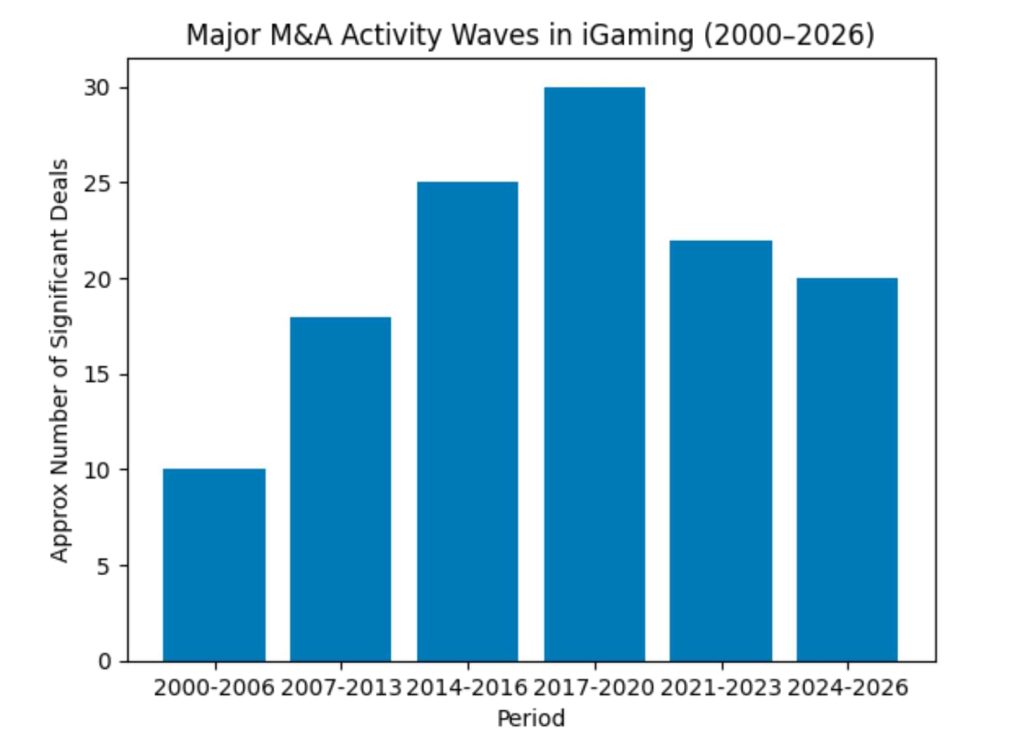
The iGaming industry has experienced several distinct M&A cycles since the early 2000s.
Early Market Formation (2000–2010)
During the early years of online gambling, hundreds of small operators emerged, particularly in online poker and sports betting. The industry was highly fragmented and largely unregulated in many jurisdictions.
Acquisitions during this period were relatively small and focused primarily on technology platforms or player networks.
First Major Consolidation (2011–2016)
As governments introduced regulatory frameworks, companies began merging to achieve the scale required to comply with licensing and compliance requirements.
One of the most significant deals during this period was the acquisition of PokerStars by Amaya Gaming (later renamed The Stars Group) for approximately $4.9 billion in 2014. The acquisition transformed Amaya into the largest publicly traded online gambling company at the time.
Another landmark transaction was the merger between Paddy Power and Betfair in 2015, creating what would later become one of the largest global gambling companies.
Global Expansion and Platform Integration (2017–2020)
The next wave of consolidation involved major international mergers designed to create global gambling groups with diversified product portfolios.
Key deals included:
- the acquisition of Ladbrokes Coral by GVC Holdings (now Entain)
- the acquisition of Sky Betting & Gaming by The Stars Group
- the merger between Flutter Entertainment and The Stars Group in 2019
These deals combined sports betting brands with casino, poker, and technology platforms.
Source: M&A Equilibrium
The 20 Largest M&A Deals in the iGaming Industry
Below are some of the most significant mergers and acquisitions shaping the modern gambling industry.
| Year | Buyer / Merger | Target | Approx Value |
| 2025 | Allwyn | OPAP | ~$18B |
| 2020 | Eldorado Resorts | Caesars Entertainment | ~$17B |
| 2017 | Tabcorp | Tatts Group | ~$11.3B |
| 2015 | Paddy Power + Betfair | Merger | ~$7B |
| 2015 | GTECH | IGT | ~$6.4B |
| 2019 | Flutter Entertainment | The Stars Group | ~$6B |
| 2025 | Apollo Global Management | IGT Digital + Everi | ~$5.4B |
| 2018 | GVC (Entain) | Ladbrokes Coral | ~$5B |
| 2014 | Amaya Gaming | Rational Group (PokerStars) | ~$4.9B |
| 2018 | The Stars Group | Sky Betting & Gaming | ~$4.7B |
| 2021 | Caesars Entertainment | William Hill | ~$3.7B |
| 2024 | Flutter Entertainment | Snaitech | ~$2.3B |
| 2022 | 888 Holdings | William Hill International | ~$2.6B |
| 2020 | Evolution Gaming | NetEnt | ~$2.1B |
| 2025 | Allwyn | PrizePicks | ~$2.1B |
| 2016 | GVC | bwin.party | ~$1.1B |
| 2017 | Scientific Games | NYX Gaming | ~$631M |
| 2022 | MGM Resorts | LeoVegas | ~$607M |
| 2021 | Entain | Enlabs | ~$450M |
| 2016 | Playtech | Best Gaming Technology | ~$175M |
These transactions illustrate how operators and technology providers have combined to create vertically integrated gambling ecosystems.
Regional Trends in iGaming M&A
Europe
Europe remains the center of the global online gambling industry. Many of the world’s largest operators originated in the United Kingdom, Ireland, Scandinavia, and Malta.
The region’s fragmented regulatory structure encourages consolidation because companies must secure licenses in multiple jurisdictions.
United States
The U.S. market has become the fastest-growing gambling sector since the legalization of sports betting in 2018.
European operators quickly entered the market through partnerships and acquisitions, particularly with casino operators and media companies.
Major brands such as FanDuel, DraftKings, and BetMGM now dominate the American sports betting market.
Asia
Asia remains heavily regulated in terms of online gambling, but investors from the region increasingly participate in gaming technology acquisitions and international investments.
Japanese gaming companies, for example, have shown growing interest in acquiring betting technology platforms.
Africa
Africa represents one of the fastest-growing emerging markets for online betting due to widespread smartphone adoption and mobile payment systems.
While deal sizes remain smaller than in Europe or North America, acquisitions in African betting companies are becoming more frequent as operators seek early market entry.
Australia
Australia has one of the world’s most established sports betting markets. Consolidation among bookmakers and gaming technology firms has played a major role in shaping the sector.
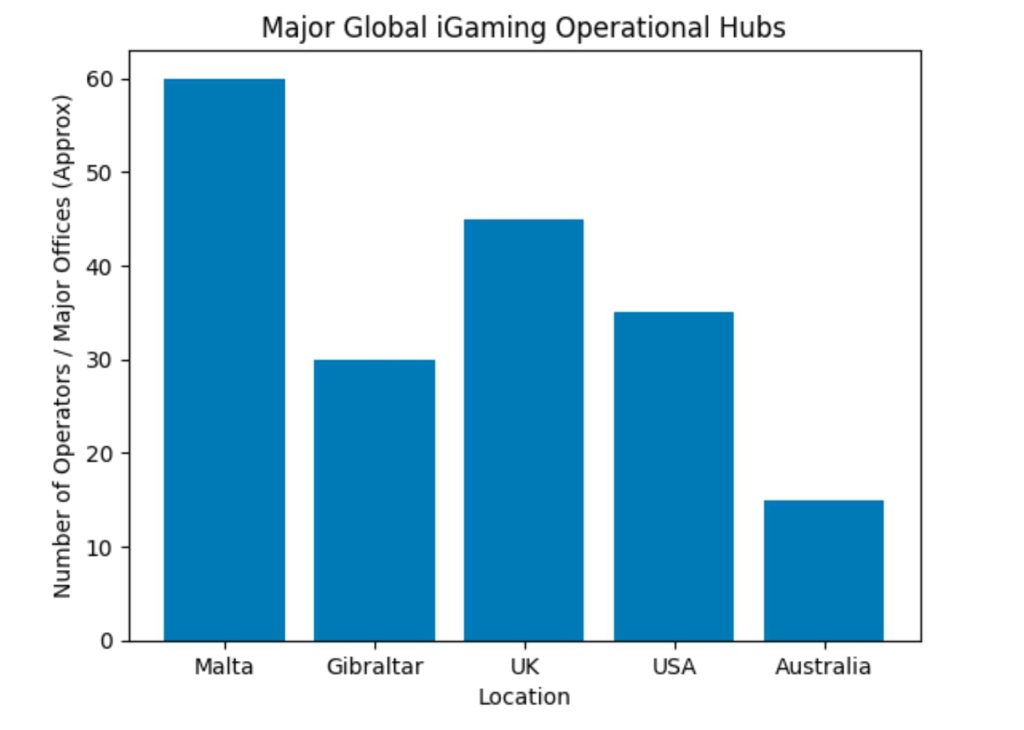
Malta and Gibraltar: Global iGaming Hubs
Two jurisdictions have played a particularly important role in the development of the online gambling industry: Malta and Gibraltar.
Malta
Malta has become the world’s leading hub for iGaming companies thanks to its early adoption of remote gambling regulation through the Malta Gaming Authority.
Advantages include:
- access to the European Union market
- favorable corporate taxation
- experienced regulatory oversight
- a large pool of industry professionals
Many major companies maintain headquarters or operational offices in Malta, including Betsson, Kindred Group, and LeoVegas.
Gibraltar
Gibraltar has also historically hosted major gambling operators such as 888 Holdings, Entain, and Bet365. Its low tax rates and well-established licensing framework attracted numerous companies during the early growth phase of the online betting industry.
Following Brexit, some operators diversified their operations across multiple jurisdictions, including Malta and mainland Europe.
Source: M&A Equilibrium
M&A Activity in 2024–2026
Recent years have continued to see major acquisitions in the gambling sector.
Key transactions include:
- Apollo Global Management acquiring IGT’s gaming and digital divisions along with Everi
- Flutter Entertainment expanding its international portfolio through acquisitions such as Snaitech
- Allwyn acquiring stakes in sports betting and fantasy sports platforms
These deals reflect a broader strategic trend toward vertical integration and technology ownership.
Risks Facing the Industry
Despite its growth potential, the online gambling sector faces several major risks.
Regulatory Changes
Governments frequently modify gambling laws, tax rates, and advertising restrictions. These changes can significantly affect profitability.
Market Saturation
In mature markets, competition has intensified to the point where operators spend enormous amounts on promotions and marketing.
Social Responsibility Concerns
Growing public concern about problem gambling may lead to stricter regulations and increased compliance requirements.
Technology and Cybersecurity
Online gambling platforms rely heavily on digital infrastructure. Cybersecurity threats, payment processing issues, or platform outages can have major financial and reputational consequences.
Future Outlook: The Next Phase of Consolidation
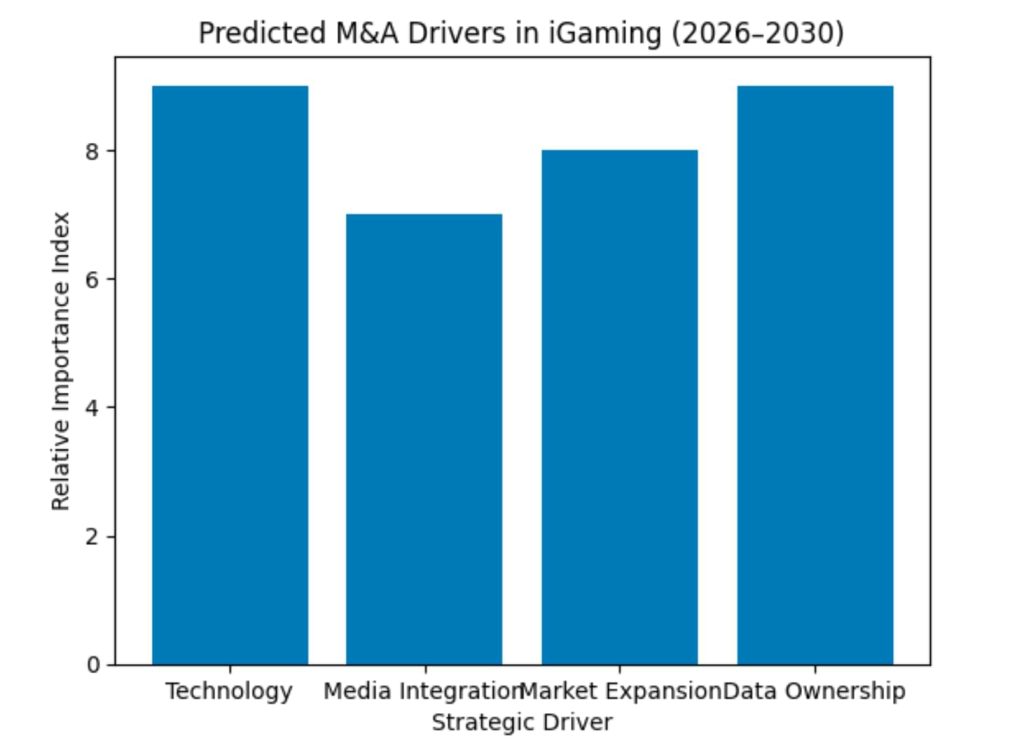
Looking ahead to 2026–2030, several trends are likely to shape future M&A activity in the iGaming industry.
- Technology acquisitions – operators will continue buying software providers and data companies.
- Media partnerships – betting platforms will increasingly integrate with sports media and streaming services.
- Global platform ecosystems – a small number of multinational operators may ultimately dominate the market.
Companies that successfully integrate technology, content, and market access are expected to lead the next phase of industry growth.
Source: M&A Equilibrium
Conclusion
The global iGaming industry has evolved dramatically over the past two decades through a series of mergers and acquisitions. What began as a fragmented market of online poker rooms and sportsbooks has become a sophisticated digital entertainment sector dominated by multinational corporations.
Consolidation has enabled operators to achieve scale, integrate technology platforms, and expand into newly regulated markets. However, the industry remains highly competitive and heavily regulated.
As the sector continues to grow and new markets emerge, mergers and acquisitions will likely remain a central strategic tool shaping the future of online gambling worldwide.