


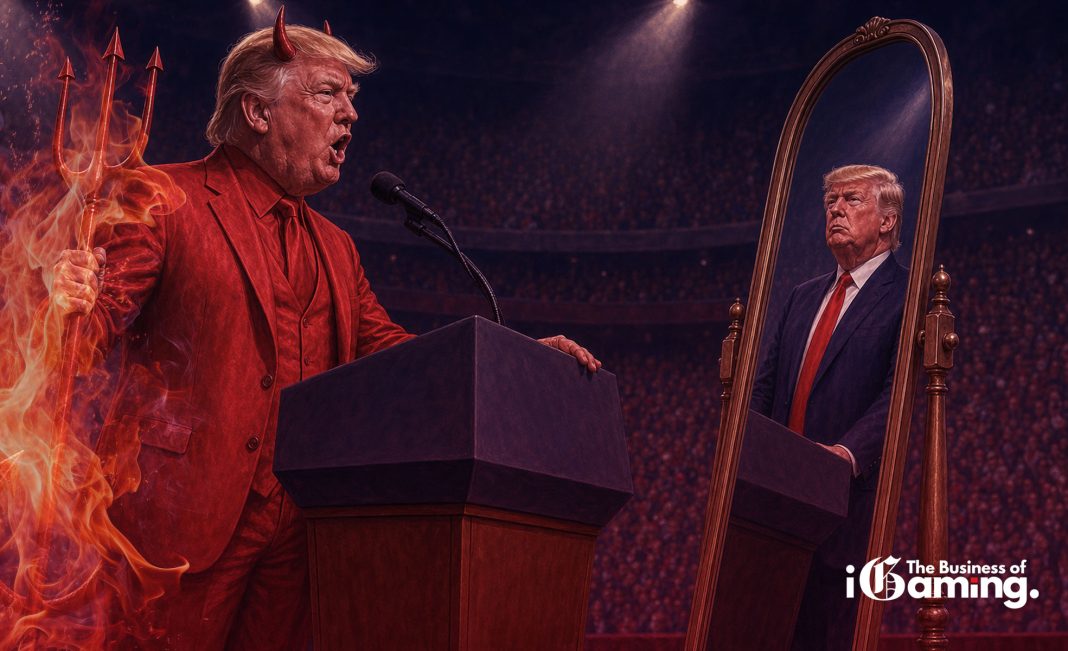

Let’s play a game. A major licensed operator misses a responsible gambling deadline, and the industry erupts. Trade press covers it for a week. Compliance Twitter – yes, it exists – has opinions. Regulatory bodies release statements. Now picture an offshore platform, unlicensed, operating freely into regulated markets, running misleading promotions, and offering zero player protections. The response? A paragraph buried in a newsletter. Maybe.
The behaviour is worse. The scrutiny is a fraction of the size. And almost nobody in the room seems to notice the gap.
The Big Operator Effect
This is not really about fairness. It is about gravity. Large, publicly listed operators in regulated markets exist inside a scrutiny ecosystem – regulators, shareholders, journalists, and compliance officers all watching the same entity at once. When they make a misstep, the splash is proportional to their size.
Offshore platforms operating in grey markets face none of that infrastructure. There are no quarterly earnings calls where an analyst asks about KYC failures. There is no licence at risk. There is no sustainability report. The result is that the industry ends up spending enormous energy policing the operators who are already trying to follow the rules, while the genuinely harmful actors operate largely undisturbed.
It is not a conspiracy. It is physics. Big rock in the pond, big splash.
Your Favourite Operator Can Do No Wrong
Here is the part that should make the industry uncomfortable: tribalism in iGaming is just as real as anywhere else, and just as invisible to the people practising it.
Affiliates, operators, and even regulators apply scrutiny unevenly depending on who is doing what. A brand they have a commercial relationship with gets the benefit of the doubt. A competitor gets dissected. A regulator they have historically clashed with gets blamed for overreach; one they prefer gets praised for the same intervention. Nobody thinks they are doing this. They are just… doing it.
The same pattern that makes political commentary so predictably tribal – defending your side’s behaviour while treating identical behaviour from the other side as outrageous – runs straight through iGaming commentary, enforcement priorities, and business relationships.
Where Nuance Gets Uncomfortable
None of the above means that all operators are equivalent, or that all scrutiny is misapplied. “Everyone cuts corners” and “everyone cuts corners equally” are two very different sentences. Missing a self-exclusion integration deadline is not in the same category as deliberately targeting vulnerable players with no opt-out mechanism. Aggressive marketing is not the same as running rigged games.
Collapsing every compliance failure into one undifferentiated pile of “they’re all as bad as each other” feels satisfyingly cynical, but it actively helps the worst offenders. If every operator is equally guilty, none of them are particularly guilty, and that is exactly the cover that genuinely harmful platforms rely on.
The scrutiny is uneven. A lot of industry outrage is tribal preference dressed up as principle. And some operators are doing meaningfully more damage than others – pretending otherwise is its own kind of dishonesty.
The Question Worth Sitting With
If you have read this far nodding along about the offshore cowboys and the grey-market bad actors – pick an operator you already respect. Now ask yourself: if a direct competitor did the exact same thing that operator did last quarter, would you be defending it, or would you be writing a LinkedIn post about standards slipping?
If you paused before answering, that is the point.
The industry will not get scrutiny right until it can apply it consistently – to the platforms it dislikes and the ones it has quietly decided are on its side.