




Luxury used to be visible. A Ferrari outside a five-star hotel. A Patek Philippe tucked beneath a tailored cuff. A summer itinerary split between Saint-Tropez, Capri and Mykonos.
Today, among a growing class of founders, investors and performance-obsessed executives, status increasingly looks different. It is less visible, more clinical and, in many cases, significantly more expensive.
The new luxury obsession is time – or more specifically, the attempt to buy more of it.
Longevity – once a niche corner of scientific research focused on ageing biology – has rapidly evolved into one of the most commercially interesting premium lifestyle categories of the decade. Fuelled by Silicon Valley entrepreneurs, celebrity biohackers and a growing ecosystem of luxury clinics, diagnostics companies and wellness technology brands, the promise is seductive: sharper cognition, stronger energy, improved biomarkers and perhaps, eventually, a longer and healthier life.
At the centre of the spectacle sits entrepreneur Bryan Johnson, whose aggressive anti-ageing protocol has transformed him into the public face of the movement. According to Business Insider, Johnson has publicly said he spends around $2 million annually on his health optimisation regime, which includes extensive blood testing, specialist physicians, supplements, structured diet, sleep optimisation and experimental therapies.
Johnson may represent the extreme, but the broader trend is very real.
Longevity is no longer simply healthcare.
It is increasingly luxury.
The Business of Buying Time
What makes the longevity economy particularly fascinating is that it does not fit neatly into any traditional category.
It is not purely medicine. It is not purely wellness. It is not purely hospitality.
Instead, it sits at the intersection of all three – blending diagnostics, preventative care, luxury experiences, consumer technology and increasingly, aspiration.
The commercial potential is substantial.
The World Economic Forum has repeatedly identified healthy ageing and longevity innovation as major future economic opportunities, pointing to the enormous financial implications of ageing populations, preventative care and health optimisation.
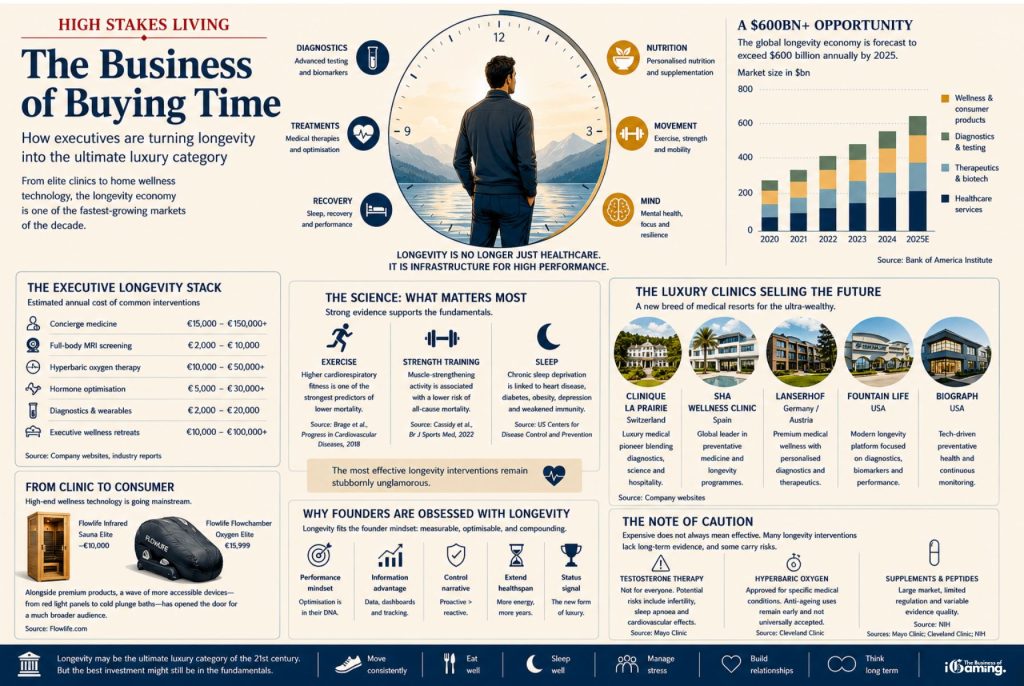
Bank of America analysts previously identified longevity as one of the decade’s major investment opportunities, with estimates placing the broader market opportunity at around $600 billion by 2025, according to reporting cited by CNBC and industry coverage.
For affluent executives, the modern health stack increasingly resembles an investment portfolio.
A typical optimisation programme may include:
- Continuous glucose monitoring
- Advanced biomarker blood panels
- DEXA body composition scans
- VO2 max performance testing
- Sleep diagnostics
- Executive hormone optimisation
- Red light therapy
- Hyperbaric oxygen sessions
- Peptide protocols
- Full-body MRI scans
- Concierge medicine memberships
- Luxury wellness retreats
The price of admission escalates quickly.
Estimated Annual Cost of the Executive Longevity Stack
| Intervention | Estimated annual cost |
|---|---|
| Concierge medicine | €15,000–€150,000+ |
| Full-body MRI screening | €2,000–€10,000 |
| Hyperbaric oxygen therapy | €10,000–€50,000+ |
| Hormone optimisation programmes | €5,000–€30,000+ |
| Diagnostics & wearables | €2,000–€20,000 |
| Executive wellness retreats | €10,000–€100,000+ |
This is no longer preventative healthcare in the conventional sense.
It is premium lifestyle infrastructure.
Bryan Johnson, Peter Attia and the rise of executive optimisation culture
Few people have done more to bring longevity into mainstream business culture than Bryan Johnson.
The Braintree founder has effectively turned his body into a public case study, publishing biomarkers, treatment protocols and biological age metrics with unusual transparency.
For critics, it is health theatre.
For supporters, it is radical experimentation.
Either way, Johnson has helped normalise conversations around preventative diagnostics and ageing optimisation among founders, executives and investors who previously spent little time thinking about long-term health beyond the occasional gym membership.
Johnson is not alone.
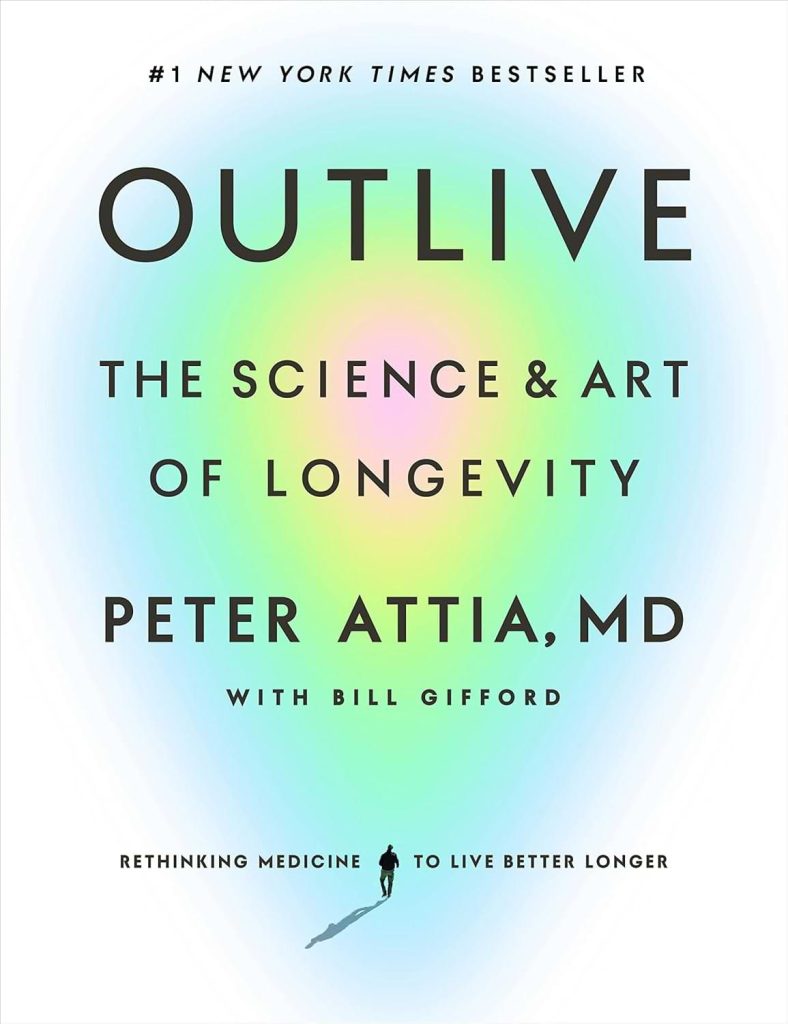
Physician and longevity specialist Peter Attia has become one of the most influential voices in performance-focused health circles, particularly after the release of his bestselling book Outlive. Attia’s work places strong emphasis on exercise, metabolic health, cardiovascular prevention and evidence-based longevity medicine rather than purely cosmetic anti-ageing interventions.
That distinction matters.
Because while Johnson represents the spectacle economy of longevity, Attia reflects a more medically grounded version of the movement.
Together, they have helped shape a new executive culture where biological optimisation increasingly carries the same prestige once reserved for luxury watches or exotic cars.
What Science Actually Supports
This is where the conversation becomes more serious. Because despite the premium branding surrounding longevity, the strongest predictors of healthy ageing remain strikingly conventional.
Exercise remains the gold standard.
A large body of evidence continues to associate higher cardiorespiratory fitness with significantly lower mortality risk. Research published through the National Library of Medicine highlights a strong association between higher cardiorespiratory fitness and lower all-cause as well as cardiovascular mortality.
In simpler terms: disciplined exercise still outperforms most gadgets. Resistance training tells a similar story.
A major review in the British Journal of Sports Medicine found strong associations between muscle-strengthening activity and reduced mortality risk.
Sleep remains equally foundational. The US Centers for Disease Control and Prevention notes that insufficient sleep is linked to increased risks including heart disease, obesity, anxiety, depression and other serious health conditions.
Harvard Medical School has similarly highlighted sleep’s critical role in cardiovascular health, cognitive performance and metabolic regulation.
The most effective longevity interventions remain stubbornly unglamorous.
Hyperbaric Oxygen: Promise versus Positioning
Hyperbaric oxygen therapy offers a useful example of where science and premium marketing begin to diverge.
There is legitimate medicine here. The Cleveland Clinic notes that hyperbaric oxygen therapy has approved uses for decompression sickness, serious infections, burns and wound healing.
But anti-ageing applications frequently marketed in private wellness circles remain far less established.
Some studies have suggested interesting potential effects on cellular ageing markers, but the broader evidence remains early and far from universally accepted as routine longevity medicine.
That does not make hyperbaric oxygen fraudulent. It simply means that science and commercial positioning do not always move at the same speed.
Testosterone and the Masculinity Optimisation Market
Hormone optimisation has become another major pillar of executive longevity culture. The appeal is understandable.
Higher energy, improved recovery, sharper mental focus, and the psychological comfort of feeling biologically younger.
But testosterone optimisation occupies one of the more commercially aggressive corners of the market.
Mayo Clinic explicitly cautions that testosterone therapy is not a universal anti-ageing treatment for otherwise healthy ageing men, noting potential risks including fertility suppression, worsening sleep apnoea and cardiovascular concerns.
This is where nuance matters. Feeling younger is not necessarily the same as extending lifespan.
The Luxury Clinics Selling the Future
What makes longevity particularly compelling is not only the science, but the business model.
This is healthcare packaged through the lens of luxury hospitality.
Switzerland’s Clinique La Prairie helped define the category decades ago, combining diagnostics, personalised medicine and ultra-premium service.
Spain’s SHA Wellness Clinic has become one of Europe’s most recognised wellness destinations, blending preventative medicine, longevity programmes and executive retreats.
Lanserhof has similarly built a premium medical wellness model targeting affluent health-conscious consumers seeking personalised diagnostics and preventative programmes.
Meanwhile, US-based entrants such as Fountain Life and Biograph are modernising the concept for a more Silicon Valley audience focused on full-body imaging, advanced biomarkers and continuous health monitoring.
But perhaps the clearest sign of where the longevity economy is heading is that it is no longer confined to elite clinics. It is becoming consumerised.
From Private Clinics to Premium Consumer Products
The same optimisation culture that once lived inside private medical facilities is increasingly entering affluent households.
A growing number of premium wellness brands now sell products that effectively bring elements of the executive health stack into the home.
Swedish wellness brand Flowlife offers a particularly clear example.
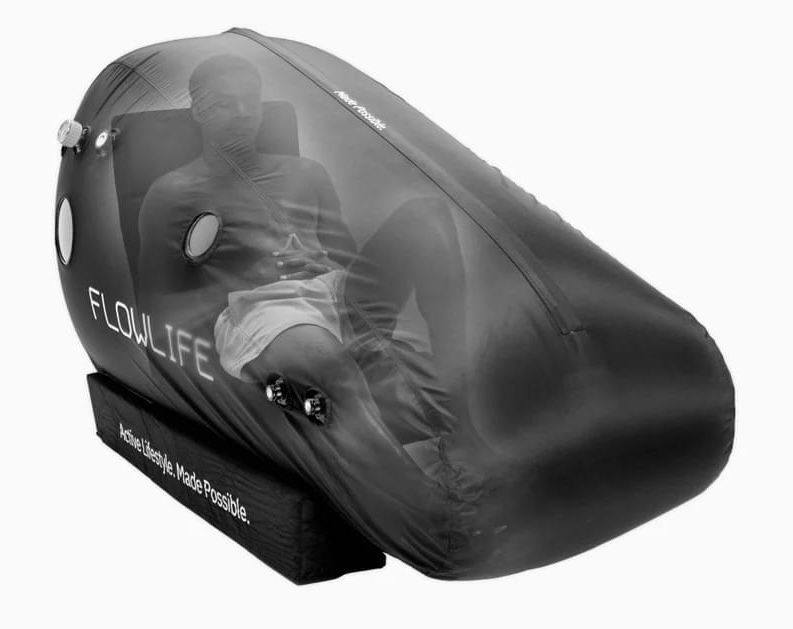
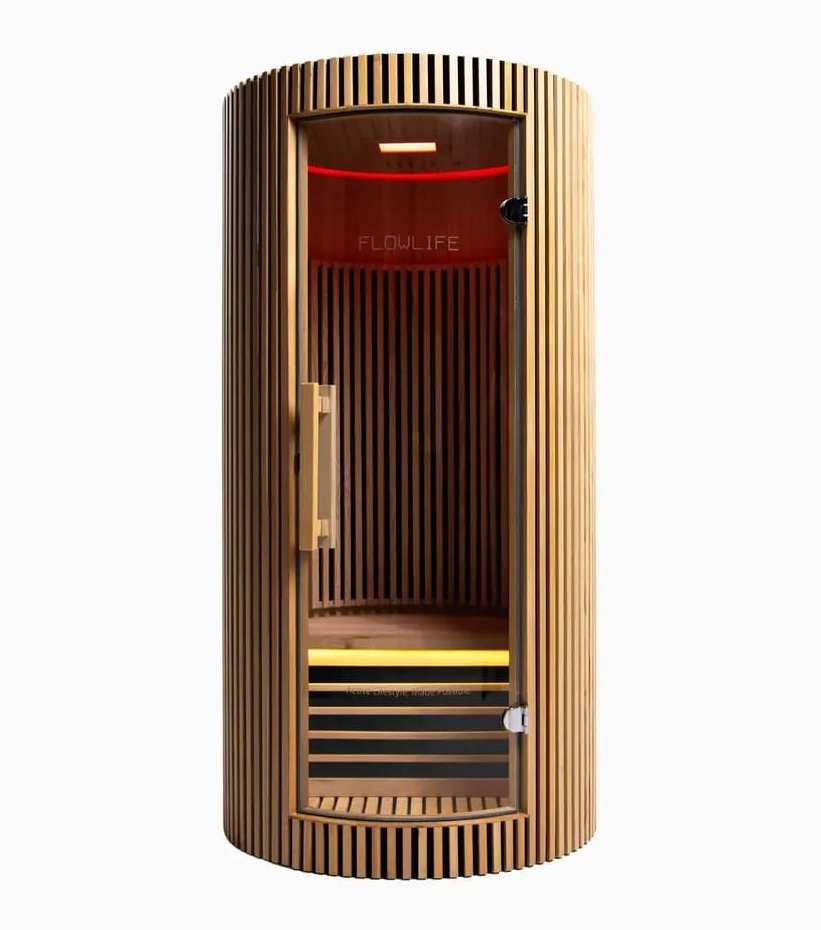
Known initially for recovery-focused products, the company has expanded aggressively into higher-end wellness technology, including its Infrared Sauna, priced at close to €10,000, and the Flowchamber Oxygen Elite, listed at €15,999.
And Flowlife is far from alone.
Consumers can now buy red light therapy panels, cold plunge systems, compression recovery boots, advanced sleep technology and various home wellness devices positioned around performance, recovery and longevity.
The commercial logic is obvious.
While billionaires chasing biological age reversal generate headlines, the far larger market may be the affluent mainstream consumer willing to spend hundreds or thousands on the promise of better recovery, sharper performance and healthier ageing.
This is where longevity starts to resemble categories like luxury fitness, premium skincare or connected home technology.
Not medicine. Lifestyle infrastructure.
Why Founders are Especially Drawn to Longevity
The founder obsession with longevity makes psychological sense. Entrepreneurs are conditioned to believe that systems can be improved, inefficiencies removed and performance engineered upward.
Longevity fits naturally into that mindset.
If customer acquisition can be optimised, why not metabolism?
If dashboards improve operational performance, why not biomarker dashboards for your own body?
Health becomes another operating system. Another measurable variable. Another optimisation problem.
That framing helps explain why longevity has moved so quickly from niche wellness interest to executive cultural signal.
The uncomfortable truth
What makes the longevity boom so compelling is that it combines something genuinely valuable – preventative healthcare – with some of the oldest instincts in luxury consumption:
- Aspiration
- Exclusivity
- Control
There is absolutely merit in better diagnostics, earlier detection and more personalised preventative care. In many ways, the movement reflects a welcome shift away from reactive medicine toward proactive health management.
But there is also a danger in confusing expensive intervention with superior intervention. That assumption has fuelled luxury markets for decades.
And longevity is no exception.
The irony is difficult to miss. An executive may spend tens of thousands annually on diagnostics, private clinics and premium wellness technology while neglecting the interventions with the strongest evidence base: regular cardiovascular exercise, resistance training, sleep quality, metabolic health and sensible lifestyle discipline.
Technology can support discipline. It cannot replace it.
Longevity will almost certainly become a far larger business over the coming decade, particularly as affluent consumers increasingly seek personal optimisation rather than conventional healthcare. But whether money can meaningfully buy substantially more life remains far less certain.
For now, perhaps the ultimate luxury is not reversing biological age. It is consistently mastering the fundamentals that medicine has been recommending all along.