


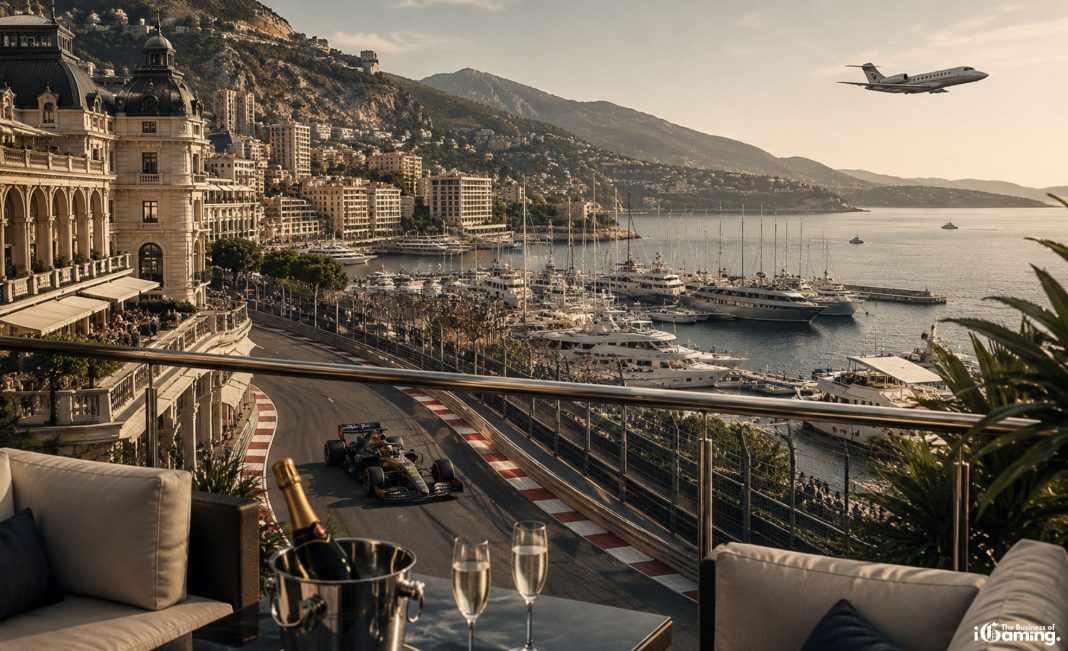

Formula 1 has evolved far beyond motorsport.
For a growing number of executives, founders, investors, and premium brands, race weekends now function as something closer to mobile boardrooms – high-speed networking ecosystems wrapped in luxury hospitality, global entertainment, and increasingly sophisticated sponsorship economics.
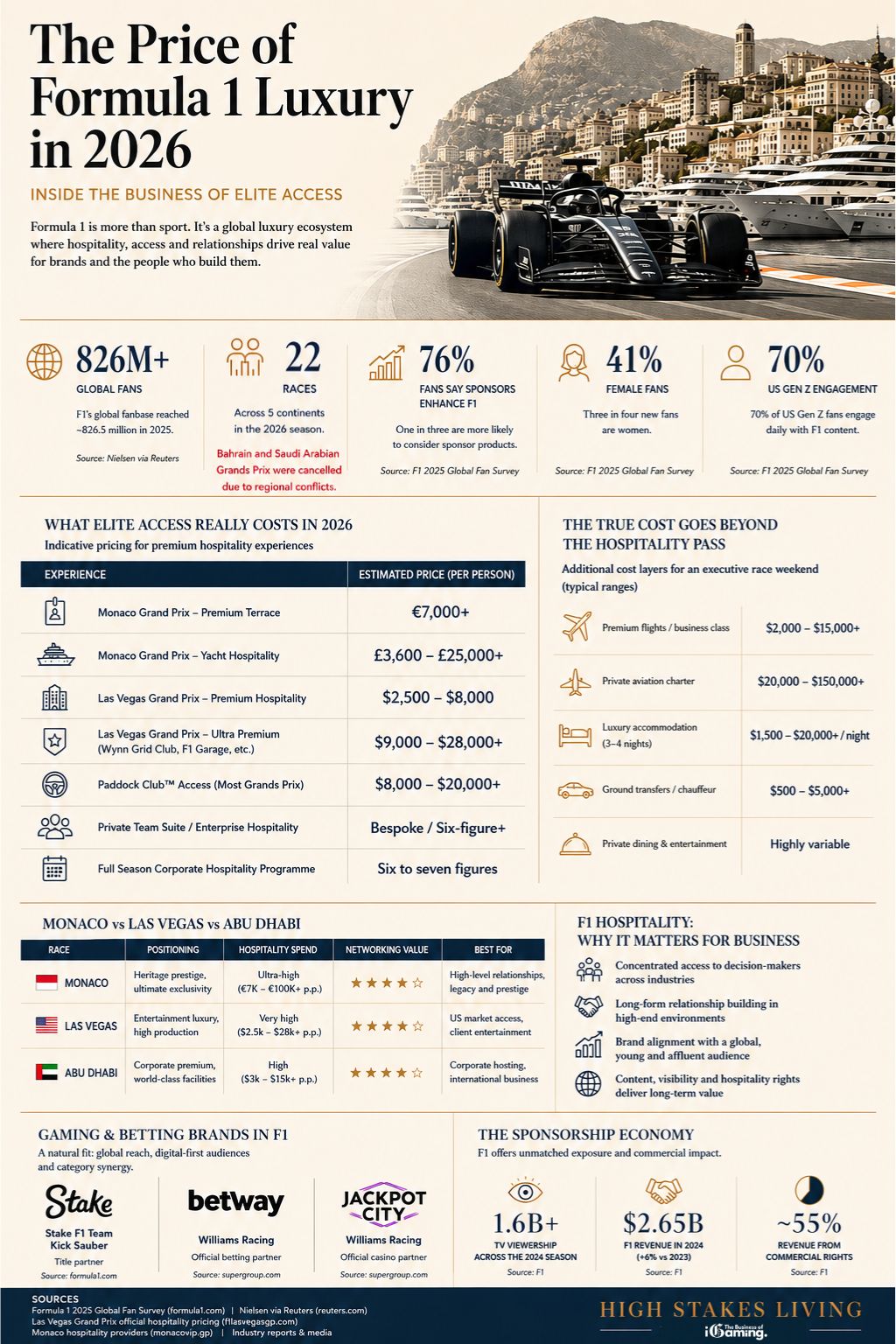
The transformation has been dramatic. Formula 1’s global fanbase reached approximately 826.5 million in 2025, according to Nielsen data cited by Reuters, while the sport’s own 2025 global fan survey points to a younger, more female, and more commercially responsive audience – precisely the type of demographic luxury and lifestyle brands want to reach.
For gaming brands, this matters.
Because while shirt sponsorships and digital activations remain visible marketing channels, Formula 1 hospitality offers something more difficult to replicate: direct access.
This is where partnerships are strengthened, acquisition conversations begin, and VIP relationships are built in environments where scarcity itself is part of the value proposition.
Formula 1’s Transformation Into a Luxury Business Platform
There was a time when Formula 1 was primarily a sport for petrolheads, legacy fans, and engineering obsessives.
That era is gone.
Under Liberty Media’s stewardship, Formula 1 has repositioned itself into a global premium entertainment asset—part sports property, part lifestyle brand, part corporate hospitality machine.
Netflix’s Drive to Survive accelerated the shift, but the underlying commercial evolution runs deeper.
Formula 1’s 2025 Global Fan Survey suggests 61% of surveyed fans engage with F1 content daily, while 76% believe sponsors enhance the sport. Perhaps even more notably, one in three surveyed fans say they are more likely to consider sponsor products, with stronger responsiveness among Gen Z audiences.
For marketers, that’s unusually strong sponsor receptiveness. For luxury brands, it validates premium positioning.
For sectors like iGaming, fintech, crypto, and high-growth B2C platforms, it explains why Formula 1 has become such a strategic arena.
Read more: Watches and Wonders Market Analysis 2026
What Formula 1 Hospitality Actually Costs in 2026
The glamour is real. So are the invoices. Formula 1 hospitality spans multiple tiers – from high-end grandstand access to ultra-exclusive private suites, trackside lounges, yacht decks, and paddock experiences.
Indicative 2026 pricing paints a revealing picture.
Estimated Formula 1 Hospitality Pricing (2026)
| Experience | Estimated Price |
|---|---|
| Monaco premium hospitality terrace | €7,000+ |
| Monaco yacht hospitality | £3,600–£25,000+ |
| Las Vegas premium hospitality | $2,500–$28,000+ |
| Paddock Club access | often $8,000–$20,000+ |
| Private team suite / enterprise hospitality | bespoke / six-figure+ |
Sources from hospitality providers and Las Vegas official ticket pricing illustrate the premium bracket Formula 1 now occupies.
And those numbers rarely tell the full story. Because entry pricing is just the beginning.
Monaco: The Benchmark for Motorsport Luxury
If Formula 1 has a spiritual home for ultra-premium hospitality, it remains Monaco. The Grand Prix isn’t simply a sporting event – it’s a concentrated display of status, wealth, and access.
Corporate guests move between yachts, rooftop terraces, luxury hotels, private dinners, and exclusive afterparties, often spending multiples beyond the race ticket itself.
A premium hospitality terrace package can start around €7,000. Trackside yacht experiences move significantly higher.
High-end bespoke arrangements climb rapidly into five figures per guest. And for enterprise entertaining, budgets expand quickly.
Monaco works because scarcity is baked into the experience. Space is limited. Access is constrained. Visibility is social currency.
That’s exactly why it works so well for executive networking. Deals are easier to start in rooms where attendance is curated.
Read more: The New Mercedes-Maybach S-Class
Las Vegas: Formula 1 as Corporate Entertainment Spectacle
Where Monaco represents heritage prestige, Las Vegas reflects Formula 1’s American luxury expansion.
The positioning is different. Vegas is less Riviera glamour, more high-production entertainment economics.
But from a corporate perspective, it may be equally compelling.
2026 Las Vegas hospitality packages reportedly range from roughly $2,500 for premium hospitality up to nearly $29,000 for ultra-premium packages such as Wynn Grid Club and F1 Garage experiences.
Vegas offers a different networking dynamic:
- easier access for US executives
- stronger entertainment ecosystem
- premium hotel integration
- major corporate client hosting opportunities
- broader luxury hospitality inventory
For gaming companies in particular, Vegas carries symbolic relevance. It sits at the intersection of sports, betting, hospitality, and entertainment.
That overlap makes it commercially potent.
The Hidden Cost of Elite Access
Formula 1 hospitality is never just the ticket. The real spend often includes:
Executive Travel Cost Layers
| Category | Estimated Range |
|---|---|
| Premium flights / business class | $2,000–$15,000+ |
| Private aviation charter | $20,000–$150,000+ |
| Luxury accommodation | $1,500–$20,000+/night |
| Ground transfers / chauffeur | $500–$5,000+ |
| Private dining / entertainment | highly variable |
A Monaco weekend for senior stakeholders can quickly move from a five-figure hospitality discussion to a six-figure relationship investment.
That may sound excessive.
But in sectors where a single commercial agreement can justify the spend, it becomes easier to understand.
Why Formula 1 Became the Ultimate Networking Playground
Formula 1 hospitality works because it creates controlled access environments. Unlike conferences, where thousands of attendees dilute attention, race hospitality compresses high-value decision-makers into limited spaces over multi-day experiences.
The dynamic is very different. Conversation becomes more natural, time together is longer, shared experiences create rapport, and status lowers friction.
That’s powerful.
In practical terms, Formula 1 hospitality offers:
- client retention opportunities
- premium relationship building
- executive networking
- partner entertaining
- investor relationship development
- cross-industry introductions
In many cases, the race itself becomes secondary. The real product is access.
iGaming’s Formula 1 Playbook: Why Betting Brands Keep Returning to the Grid
Formula 1’s commercial ecosystem increasingly overlaps with sectors that understand the value of global digital audiences, premium customer acquisition, and high-value sponsorship visibility.
That helps explain why betting, casino, and adjacent digital gaming brands continue to invest in the sport.
The logic is straightforward. Formula 1 offers global reach, premium brand positioning, affluent audiences, and a calendar that delivers year-round visibility across major international markets.
For iGaming operators – many of whom already spend aggressively across football, combat sports, and live entertainment – Formula 1 offers something different: prestige.
Unlike traditional sports sponsorships, Formula 1 carries a luxury halo that can elevate brand perception beyond pure acquisition marketing.
Notable iGaming and Betting Brand Involvement in Formula 1
| Brand | Team / Partnership | Notes |
|---|---|---|
| Stake | Sauber / Stake F1 Team Kick Sauber | Title branding presence, although subject to local advertising restrictions |
| Betway | Williams Racing | Official betting partner |
| Jackpot City | Williams Racing | Official casino partner |
Stake is arguably the most visible iGaming example.
Its branding became globally prominent through the Stake F1 Team Kick Sauber identity, giving the operator rare title-level visibility in one of the world’s most premium sports properties. Formula 1’s own official channels have referenced the Sauber-Audi transition from 2026, meaning this specific branding era reflects a particular commercial window rather than a permanent structure.
More recently, Super Group significantly expanded the category’s presence through Williams Racing.
Its Betway and Jackpot City brands became official partners, bringing both sportsbook and online casino representation into Formula 1’s sponsorship ecosystem. Super Group explicitly framed the partnership around Formula 1’s global audience and commercial reach.
Why Formula 1 Fits iGaming Better Than Many Other Sports
For operators, the appeal goes beyond logo placement. Formula 1 aligns unusually well with the modern iGaming playbook:
Global distribution
Formula 1 reaches audiences across Europe, Latin America, the Middle East, Asia, and North America—regions that matter commercially for international operators.
Premium customer perception
Association with Formula 1 can reposition a brand upward, particularly versus purely tactical sponsorship channels.
VIP hospitality opportunities
This is where the business case becomes especially compelling. A Formula 1 sponsorship is not simply a branding asset. It creates access to premium hospitality inventory, executive entertaining, B2B relationship building, affiliate hosting opportunities, and high-end customer experiences.
For gaming brands, that matters because the value of a single strategic relationship can often exceed the direct marketing return of conventional sponsorship visibility.
Digital audience overlap
Formula 1’s increasingly younger, digitally engaged audience fits naturally with online-first gambling and gaming operators.
Reuters recently reported that Formula 1 itself sees sports betting as an underdeveloped commercial category, despite the obvious audience overlap.
The Prestige Multiplier
Formula 1 sponsorship works differently from football.
- Football delivers scale.
- Formula 1 delivers scarcity.
That distinction matters. Hospitality suites, paddock access, private networking environments, and invitation-only experiences transform sponsorship into relationship infrastructure.
For iGaming, that creates a hybrid commercial asset: part marketing channel, part executive access platform. And that may be precisely why betting brands keep finding their way back onto the grid.
Sponsorship Economics: The Bigger Picture
Hospitality is just one side of Formula 1’s luxury economy. The sponsorship layer is enormous.
Title partnerships, official supplier agreements, regional activations, and hospitality integrations create a multi-layer commercial ecosystem.
What brands buy is not just logo exposure.
They buy:
- storytelling
- brand association
- executive access
- hospitality rights
- content opportunities
- premium audience credibility
Formula 1’s fan data reinforces the value proposition. According to the 2025 fan survey:
- 76% believe sponsors enhance the experience
- one-third are more likely to consider sponsor products
- younger audiences are even more commercially receptive
That is unusually sponsor-friendly compared to many sports properties.
Audience Demographics: Why Luxury Brands Keep Investing
Formula 1’s audience evolution explains much of the luxury momentum. According to Formula 1’s own data:
- female fans account for three in four new fans
- Gen Z engagement is accelerating
- US market expansion remains strong
- 70% of surveyed US Gen Z respondents engage daily with F1 content
Reuters also reported Nielsen estimates global fandom at over 826 million. This matters because premium brands increasingly need cultural relevance—not just traditional prestige.
Formula 1 now offers both. That combination is rare.
Monaco vs Las Vegas vs Abu Dhabi
Not all Formula 1 hospitality delivers the same business value.
Formula 1 Luxury Comparison
| Race | Positioning | Hospitality Spend | Networking Value |
|---|---|---|---|
| Monaco | heritage prestige | ultra-high | exceptional |
| Las Vegas | entertainment luxury | very high | strong |
| Abu Dhabi | corporate premium | high | very strong |
Quick Read
- Monaco
Best for exclusivity, prestige, legacy relationship building. - Las Vegas
Best for US-facing entertainment hospitality. - Abu Dhabi
Strong executive hosting environment with premium infrastructure.
The “best” option depends entirely on business objectives.
Why Formula 1 Matters for iGaming
For operators and suppliers, Formula 1 mirrors broader shifts already visible in iGaming. Customer acquisition is no longer purely transactional.
- Brand perception matters more.
- VIP ecosystems matter more.
- Premium partnerships matter more.
- Entertainment convergence matters more.
Formula 1 offers a case study in how premium experience can become a strategic commercial product. And there’s a second lesson.
Hospitality itself can be media.
In a social-first business environment, executives sharing Monaco yacht photos or Paddock Club access creates secondary brand exposure beyond the physical event itself.
Visibility compounds. That’s marketing logic many gaming brands understand well.
Read more: Hard Rock Hotel Malta Set to Redefine Lifestyle Hospitality in 2026
The Bigger Picture
Formula 1 hospitality is not expensive because of the race. It is expensive because of what the race attracts:
- Decision-makers.
- Investors.
- Luxury consumers.
- Global brands.
- Premium media attention.
- Relationship capital.
That is what companies are paying for. And increasingly, Formula 1 may be one of the most efficient luxury networking ecosystems in global business.
Sources
- Formula 1 2025 Global Fan Survey
- Formula 1 corporate communications survey release
- Reuters on F1 global fan growth / Nielsen estimates
- Reuters on Formula 1 betting ambitions
- Monaco hospitality pricing references
- Las Vegas pricing reference / official sale discussion