


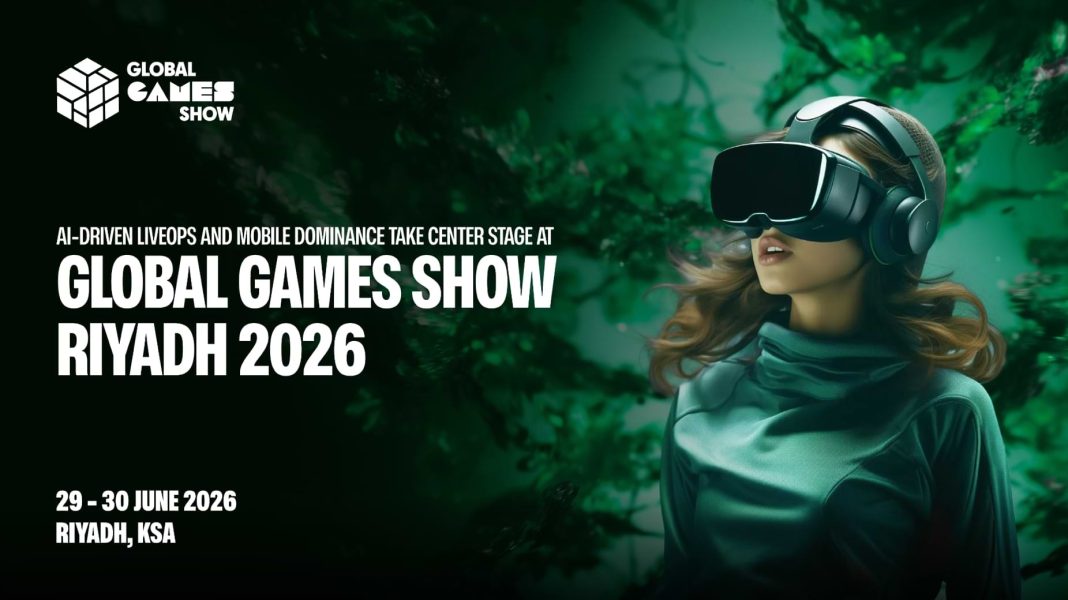

Saudi Arabia is no longer just investing in gaming – it is steadily becoming one of the industry’s most influential meeting places.
The Global Games Show Riyadh 2026, held on 29–30 June, brought together developers, publishers, investors, esports organisations, technology providers and policymakers from around the world to explore where interactive entertainment is heading next. Rather than focusing solely on blockbuster game launches, the conference highlighted the technologies reshaping the industry’s future, from artificial intelligence and cloud gaming to Web3, mobile esports and digital ownership.
Co-located with the Global AI Show Riyadh and Global Blockchain Show Riyadh, the event demonstrated how gaming is increasingly converging with artificial intelligence, blockchain and emerging digital technologies.
According to the organisers, the summit attracted more than 15,000 registrations, welcomed 6,723 attendees, featured 100+ speakers, 100 exhibitors and delegates from more than 80 countries, with around 70% of participants holding C-level positions.
Saudi Arabia Is Building More Than A Gaming Market
The Kingdom’s ambitions extend well beyond becoming another destination for gaming events.
Gaming has become a strategic pillar of Vision 2030, alongside artificial intelligence, esports, tourism and digital infrastructure. Through significant investments in game development, esports, entertainment, and technology, Saudi Arabia as a market, is positioning itself as a regional hub capable of attracting international publishers, startups, and investors.
The Global Games Show reflected that ambition by bringing together stakeholders from across the gaming ecosystem, including traditional studios, Web3 gaming companies, venture capital firms, content creators and government representatives.
Mobile Gaming Is Reshaping The Industry
One of the strongest themes throughout the conference was the continued rise of mobile gaming. While console gaming remains an important part of the industry, discussions in Riyadh focused on how smartphones have become the world’s largest gaming platform, lowering barriers to entry for both players and developers.
Speakers highlighted how titles such as PUBG Mobile and Mobile Legends: Bang Bang have helped establish mobile esports as a serious competitive ecosystem, particularly across the Middle East, Asia and Latin America. Affordable smartphones and expanding internet access have allowed millions of players to participate without investing in expensive gaming PCs or consoles.
For publishers, that shift represents both an opportunity and a challenge. Success increasingly depends on LiveOps, player retention, cloud infrastructure and AI-driven personalisation rather than simply launching new titles.
AI Is Becoming A Core Part Of Game Development
Artificial intelligence featured prominently throughout the event. Rather than focusing exclusively on generative AI, speakers explored how AI is transforming the entire game development lifecycle – from automated content creation and LiveOps to player analytics, intelligent moderation and personalised gaming experiences.
Cloud gaming, augmented reality (AR), virtual reality (VR) and AI-assisted development were repeatedly identified as technologies expected to reshape the industry’s next decade.
For developers, the message was clear: future success will depend not only on creativity but also on data, automation and continuous player engagement.
Industry Leaders Shared Their Vision
The conference featured a diverse lineup of speakers representing gaming, sport, technology and international organisations.
Among the notable speakers were:
- Johnson Yeh, Founder & CEO of Ambrus Studio, who opened the conference by discussing immersive gaming experiences and the technologies moving gameplay beyond traditional screens.
- Virginia Villar Arribas, Director of the Private Sector Partnerships Service at the UN World Food Programme, who explored how gaming can contribute to education, awareness and humanitarian initiatives.
- Nayef BinHumaid, Chairman of the Board at the Saudi Baseball and Softball Federation.
- Nadeem Bakhsh, CEO of webook.com.
- Hassan Yusuf, Head of Partnerships at the Real Madrid Foundation – Education Football Program powered by Riyadh Schools.
- Kanessa Muluneh, CEO of Rise of Fearless.
- Yasmina Kazitani, President of the Blockchain Game Alliance.
The event also featured remarks from Charity Joy, CEO of Mirai, who highlighted Saudi Arabia’s growing community of young developers and described the Kingdom’s combination of ambition, creativity and talent as one of its greatest strengths for the future of gaming.
Digital Ownership And Web3 Continue To Mature
Beyond AI and mobile gaming, another recurring topic was digital ownership. Sessions examined how blockchain infrastructure is creating new opportunities for player-owned assets, community-driven economies and alternative monetisation models.
While Web3 gaming remains an evolving sector, discussions suggested the focus is gradually shifting from speculation towards practical use cases centred on ownership, interoperability and long-term player engagement.
Exhibitors Reflected A Diverse Gaming Ecosystem
The exhibition floor showcased companies spanning game development, Web3 infrastructure, gaming services and enterprise technology.
Notable exhibitors included:
- ClubMOS Technologies
- Cropr Digital
- Plotdex
- JPYR
- Arkonix
- TorusChain Association
- Smartflow
- The Loopcraft
- EGS
- Setup Master the Art of Gaming
- Venn Studio
The range of exhibitors highlighted how modern gaming extends far beyond traditional game studios, encompassing blockchain platforms, infrastructure providers, development tools and community-focused technologies.
VAP Ventures Expands Beyond Events
One of the event’s most significant announcements came from VAP Group, which introduced VAP Ventures – a new initiative aiming to support 100 startups by 2030.
According to Vishal Parmar, Founder and CEO of VAP Group, the objective is to create an ecosystem where conversations evolve into partnerships and new businesses, helping founders build the next generation of gaming experiences.
For startups operating across gaming, AI, blockchain and immersive technologies, the initiative signals Saudi Arabia’s ambition not only to host global events but also to play a more active role in supporting innovation.
The Global Games Show Riyadh 2026 highlighted how the gaming industry is entering a new phase.
Artificial intelligence is changing how games are built and operated. Mobile gaming continues to expand global audiences. Web3 technologies are introducing new models of ownership and monetisation. At the same time, countries such as Saudi Arabia are investing heavily in the infrastructure needed to support long-term industry growth.
For developers, publishers, investors and technology providers, Riyadh is becoming more than a conference destination. It is emerging as one of the world’s fastest-growing hubs for conversations about the future of interactive entertainment.
The conclusion of Global Games Show Riyadh 2026 set the foundation for the evolution of interactive gaming and digital entertainment. The positive momentum generated by attendees, exhibitors, and speakers at this event will inform the decisions that will shape the discussions at the Global Games Show 2026 Abu Dhabi.