


When Evolution marked its 20th anniversary, the headline figures were predictably impressive: more than 22,000 employees, 24 studios across six continents, and a client base exceeding 770 operators worldwide.
Yet those numbers, while significant, only tell part of the story.
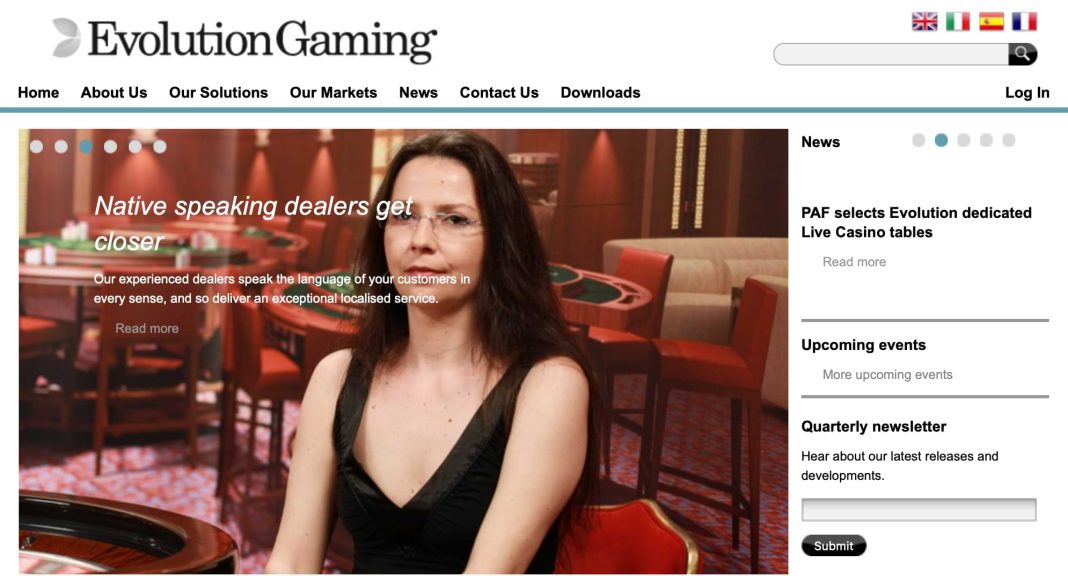
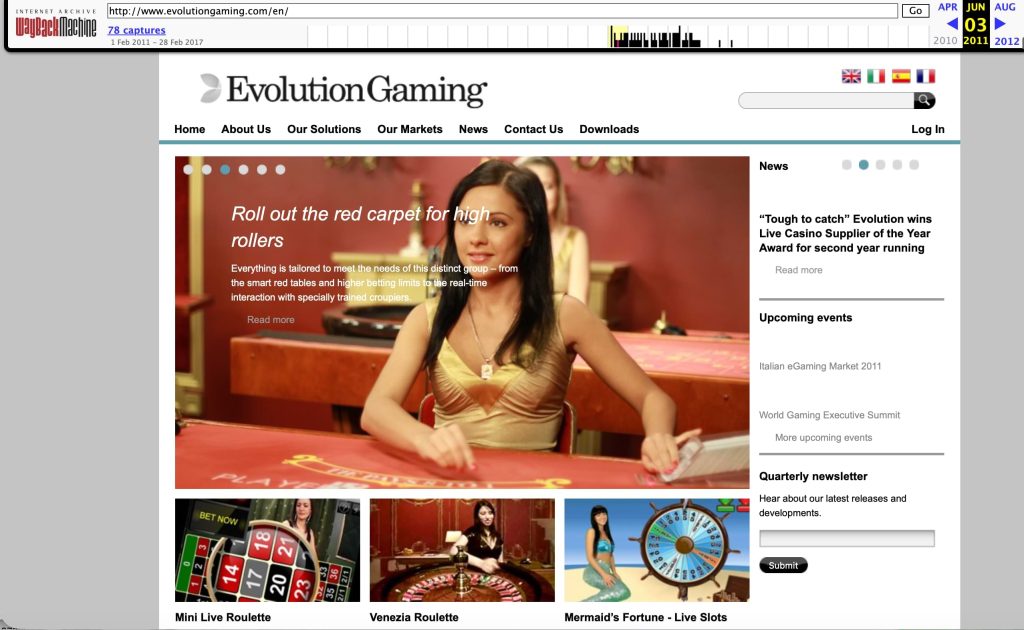
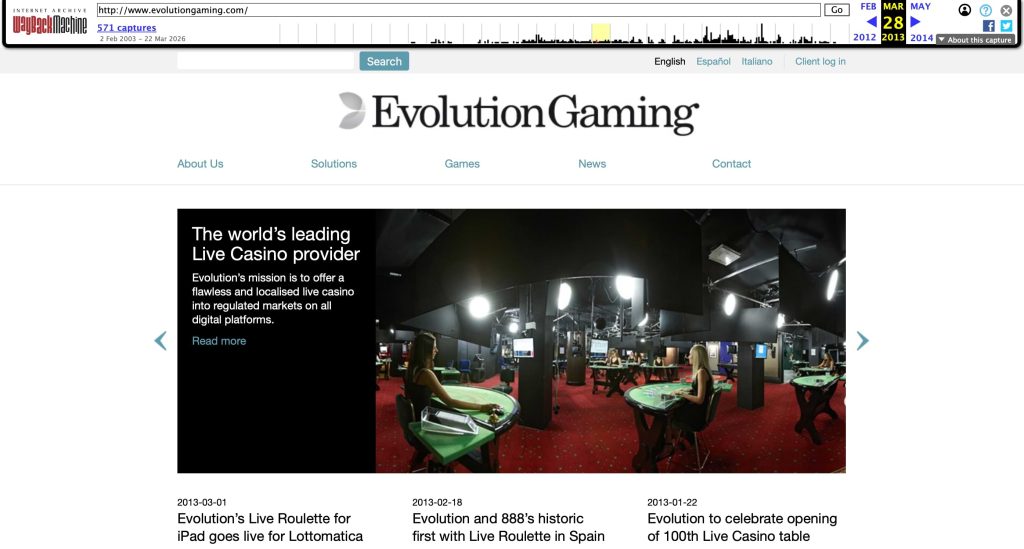
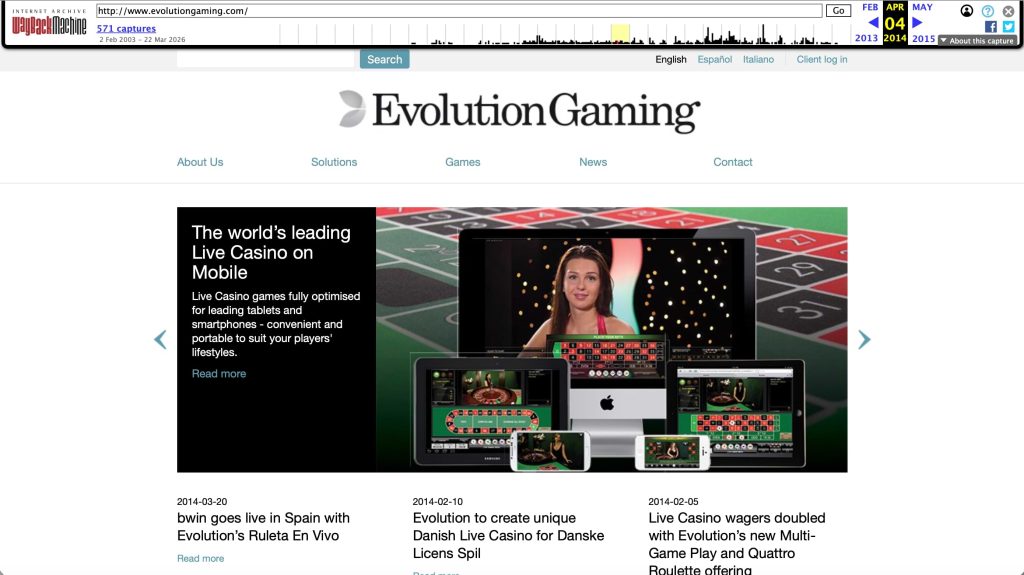
To understand how Evolution moved from a single studio in Latvia to arguably the most influential supplier in iGaming, we took a step back – using the Wayback Machine to revisit the company’s earliest digital footprint.
That, in itself, proved more difficult than expected.
Reconstructing the Early Years
Much of Evolution’s early web presence is fragmented. Several pages from the late 2000s are either broken or incomplete, reflecting the broader challenge of tracing the origins of an industry that scaled faster than it documented itself.
The earliest consistently functional snapshot appears around 2011. From there, it becomes possible to reconstruct the company’s formative years through archived news, product pages, and partner listings.
What emerges is not a story of rapid expansion, but one of deliberate positioning.
A Market That Didn’t Yet Exist (2006–2007)
When Evolution launched in 2006, live casino was far from a proven vertical. The dominant model in online gaming remained RNG-based products, and the idea of streaming real dealers to players in real time was widely viewed as both technically complex and commercially uncertain.
From the outset, however, Evolution framed live dealer gaming not as an add-on, but as a structural shift.
By 2007, the company had already secured agreements with a number of operators that would go on to shape the European market, including Gala Coral, PartyGaming, William Hill, and Stan James.
At the time, these partnerships were less about scale and more about validation. As Jens von Bahr noted in early communications, live casino represented “an evolutionary step” for the industry – a statement that, in retrospect, understated the scale of what was to come.
Building Credibility Before Scale (2008–2009)
If the early years were about proving the concept, the period between 2008 and 2009 was about establishing credibility.
Rather than pursuing rapid distribution, Evolution focused on securing partnerships with established, high-trust operators. The customer lists from the period read like a who’s who of European iGaming:
- 888
- Unibet
- Ladbrokes
- Sky Bet
- Sportingbet
- Paddy Power
These were not marginal deals. They represented a shift in operator perception – live casino was no longer experimental; it was becoming essential.
A 2009 partnership announcement with Paddy Power captures the shift in tone. The emphasis was not on technology, but on experience: real dealers, real tables, and real-time interaction.
At the same time, Evolution was investing heavily behind the scenes. Its Riga studios were expanded significantly, at one point increasing in size by 400%, to meet what was described as “soaring customer demand.”
Not a Game Supplier, but a Broadcast Platform
One of the more revealing insights from the early material is how Evolution described itself.
It was not positioning as a traditional game provider.
Instead, the company presented its offering as a broadcast-driven live casino environment, emphasising:
- TV-quality video streaming
- Real-time interaction with professional dealers
- Fully branded, operator-specific environments
- Localised experiences across languages and currencies
This distinction mattered. While competitors focused on game mechanics, Evolution focused on replicating the physical casino experience in a digital format. In doing so, it effectively redefined the category.
The Customisation Layer
Another defining feature of Evolution’s early strategy was its approach to customisation. Operators were not simply integrating a product; they were building tailored environments within Evolution’s infrastructure:
- Dedicated tables with operator branding
- Dealer presentation aligned with brand identity
- Market-specific adaptations for language and user experience
This approach did more than improve player engagement – it embedded Evolution deeply within operator ecosystems, creating both differentiation and long-term dependency.
Infrastructure, Partnerships and Precision
Even seemingly minor details in the early archives point to a broader philosophy.
The partnership with roulette wheel manufacturer Cammegh, for instance, highlights Evolution’s focus on authenticity and precision engineering.
This attention to detail extended across the entire product stack – from studio design to dealer training – reinforcing the idea that live casino was not just about functionality, but about trust and immersion.
The Inflection Point (2010–2011)
By 2010, Evolution had moved beyond validation and into acceleration.
The company’s progress during this period can be summarised through a series of milestones:
- Recognition through EGR industry awards
- eCOGRA certification, strengthening regulatory trust
- Expansion of studio capacity and technical infrastructure
- Launch of Dedicated Tables & Environments
At ICE 2011, Evolution presented what now appears to be an early version of the modern iGaming product ecosystem—combining live gaming, localisation, and branded experiences into a single, scalable offering.
Notably, several concepts showcased at the time, such as hybrid live products and immersive environment, would only become industry standards years later.
From Live Tables to Global Entertainment
Two decades on, the scope of Evolution’s business has expanded far beyond its original remit.
Today, the company operates:
- More than 2,000 live tables globally
- A portfolio spanning live casino, slots, RNG and game shows
- Over 100 new game releases annually
Titles such as Crazy Time and MONOPOLY Live have helped define the “game show” category, blurring the lines between gambling and entertainment in a way that few could have anticipated in the company’s early years.
A Company That Shaped Its Own Market
Looking back, the most striking aspect of Evolution’s journey is not its growth, but its timing. The company did not simply respond to demand – it anticipated it.
By investing early in infrastructure, securing partnerships with leading operators, and positioning live casino as a core product rather than a niche feature, Evolution effectively shaped the trajectory of the entire sector.
Today’s market, where live casino is a standard offering across operators globally, is in many ways a reflection of those early strategic decisions.
Looking Ahead
If the first 20 years were defined by the rise of live casino, the next phase is likely to centre on personalisation, content convergence, and deeper integration between gaming and entertainment.
Evolution has already begun moving in that direction, combining branded content, high-frequency releases, and advanced engagement mechanics into a unified offering.
Whether that leads to another category-defining shift remains to be seen. But if the past two decades offer any indication, Evolution is unlikely to wait for the market to decide.